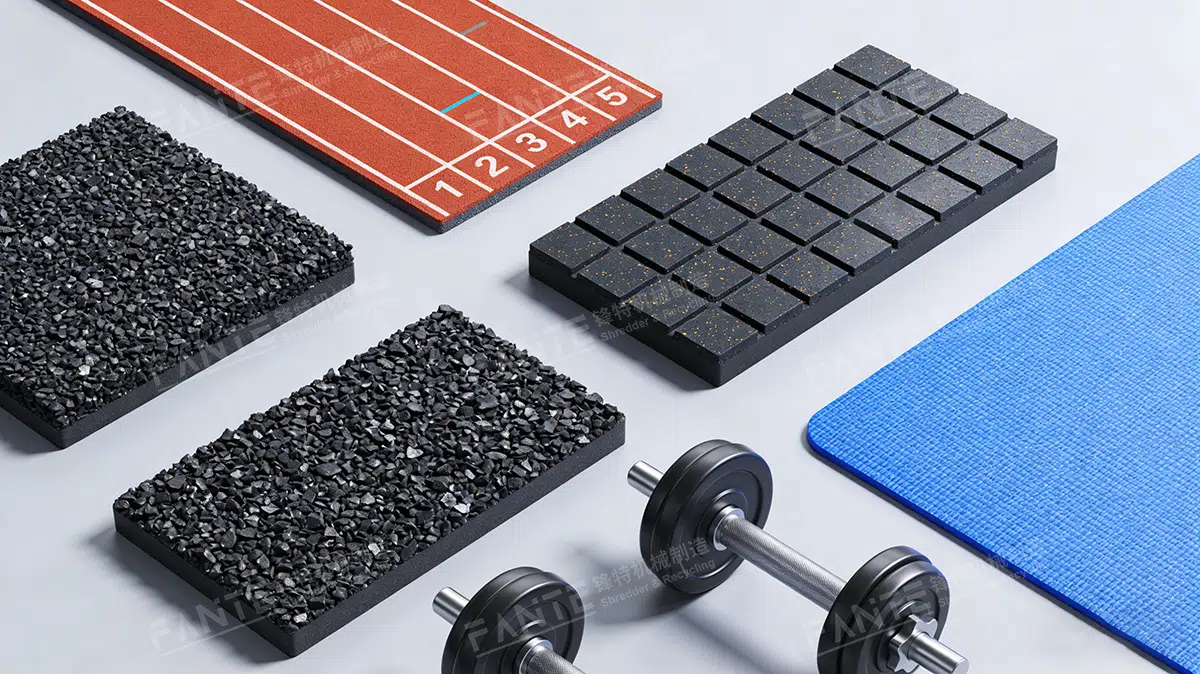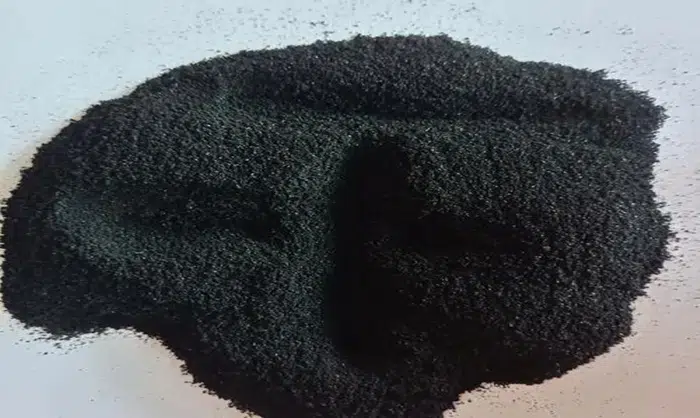







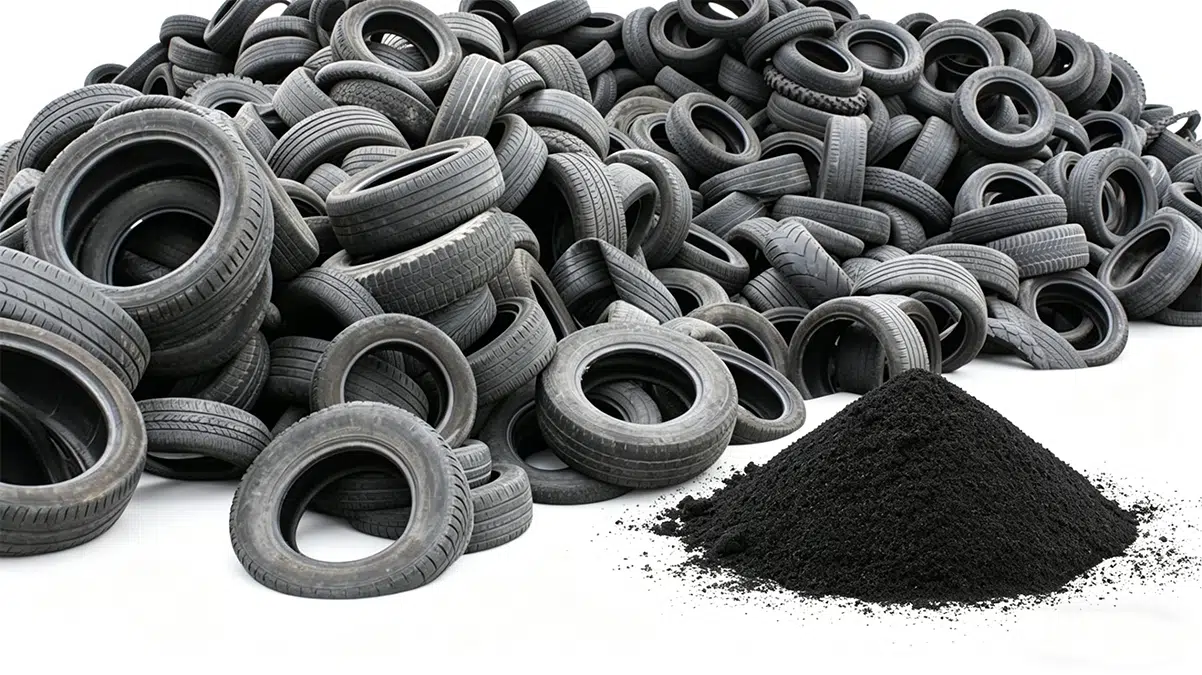
Recycling processes convert waste tires into rubber powder. Rubber powder consists of extremely fine rubber particles obtained by pulverizing waste tires in their entirety. Based on particle size, rubber powder can be classified into coarse, fine, superfine, and ultra-fine grades. The manufacturing process for coarse rubber powder remains relatively simple, but it offers limited reuse value. In contrast, fine rubber powder has a smaller particle size. It also has a much larger specific surface area. These properties allow it to meet strict manufacturing requirements. As a result, it maintains strong market demand. Rubber powder has a wide range of applications across two major fields. In the rubber industry, it is used for direct molding. It is also blended with virgin rubber to produce finished products. In non-rubber industries, rubber powder is used in asphalt modification. It is also applied in waterproofing membrane production. Additionally, it serves as a coating or protective material in construction.
Among the more mature, industrialized methods for producing rubber powder are the cryogenic pulverization process and the ambient-temperature pulverization method. The cryogenic pulverization process encompasses both ultra-low-temperature pulverization techniques and hybrid processes that combine low-temperature and ambient-temperature pulverization.
Pre-processing
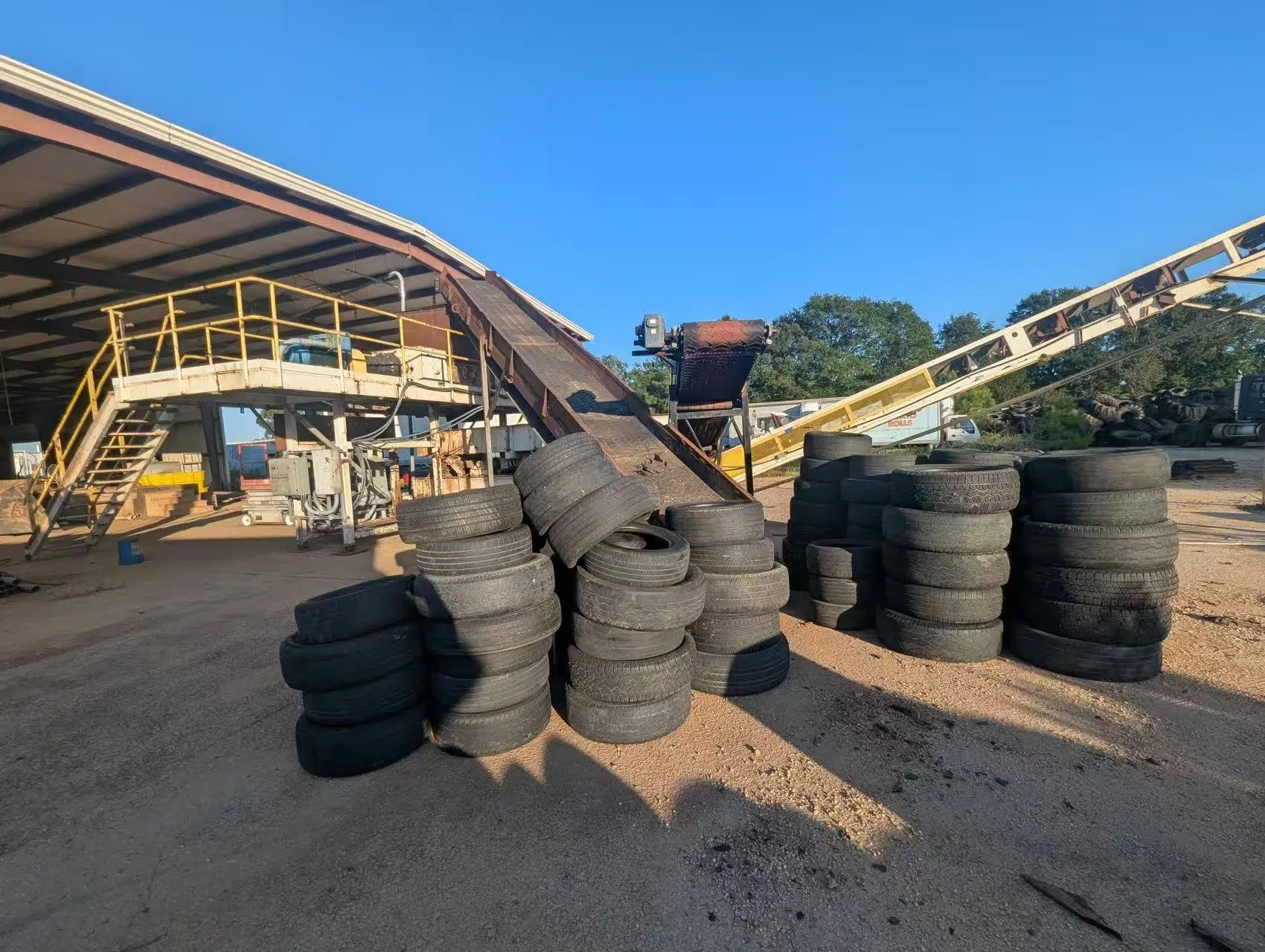
Prior to pulverization, waste rubber undergoes a series of preliminary processing steps, including sorting, cutting, and cleaning. The system first performs initial crushing on pre-processed waste rubber: operators feed waste tires—after removing steel bead rings—into an open-type rubber cracker to break them into rubber granules. A magnetic separator then extracts steel wires, while it returns the remaining steel bead rings to the cracker for further crushing. After separating rubber chunks from steel wires, a vibrating screen isolates rubber powder particles of the desired size. A cyclone separator then removes residual tire cord fibers. Advanced methods for this stage include ozone-assisted pulverization, widely adopted by medium-scale rubber powder producers, and high-pressure explosive pulverization, which suits large-scale production plants. Additionally, fine pulverization techniques are particularly effective for materials that are difficult to crush at ambient temperatures, ensuring that the resulting product remains free from degradation caused by oxidation or thermal exposure.
Process Flow
Currently, there are two primary process flows utilizing liquid nitrogen as the cryogenic medium: one involves the ultra-low-temperature pulverization of waste tires, while the other combines both ambient-temperature and ultra-low-temperature pulverization stages for waste tires. Comparatively speaking, the first process generates a significant amount of heat during coarse crushing; consequently, the material must undergo a subsequent freezing step using liquid nitrogen. The second process, while saving on liquid nitrogen consumption compared to the first, involves multiple stages of coarse crushing and magnetic separation, thereby increasing equipment investment costs.
The production of fine rubber powder necessitates a combination of these two approaches. After obtaining fine powder, the system classifies it to isolate particles that meet specified size requirements, then passes them through a separation device to remove fibrous impurities, bags the material, and designates it as the final product.
Modification Treatment
A portion of this finished product may subsequently undergo modification treatment. Surface modification primarily employs chemical, physical, or other methods to alter the surface properties of the rubber powder. Modified rubber powder exhibits excellent compatibility when blended with virgin rubber or other polymeric materials; the resulting composite materials possess performance characteristics closely approximating those of pure substances, yet they significantly reduce production costs while simultaneously facilitating resource recovery and addressing pollution issues.
Currently, global technologies for processing rubber powder include:
- Adsorbing compounding agents onto the surface of rubber powder particles to facilitate cross-linking with virgin rubber.
- Adsorbing specific organic monomers and initiators onto the rubber powder surface, followed by a heat-induced reaction under a nitrogen atmosphere to form an interpenetrating polymer network that integrates with the virgin rubber.
- Chemically treating the rubber powder surface to generate functional groups capable of bonding with virgin rubber.
- Spraying polymer monomers onto the surface of coarse rubber powder before mechanical pulverization thereby generating free radicals that trigger a graft polymerization reaction with the monomers.
A significant application for modified rubber powder involves its incorporation into asphalt mixtures for road paving. Modified rubber powder blends easily and uniformly with hot asphalt, resists segregation and sedimentation, and meets the requirements for pipeline transport and pumping operations.