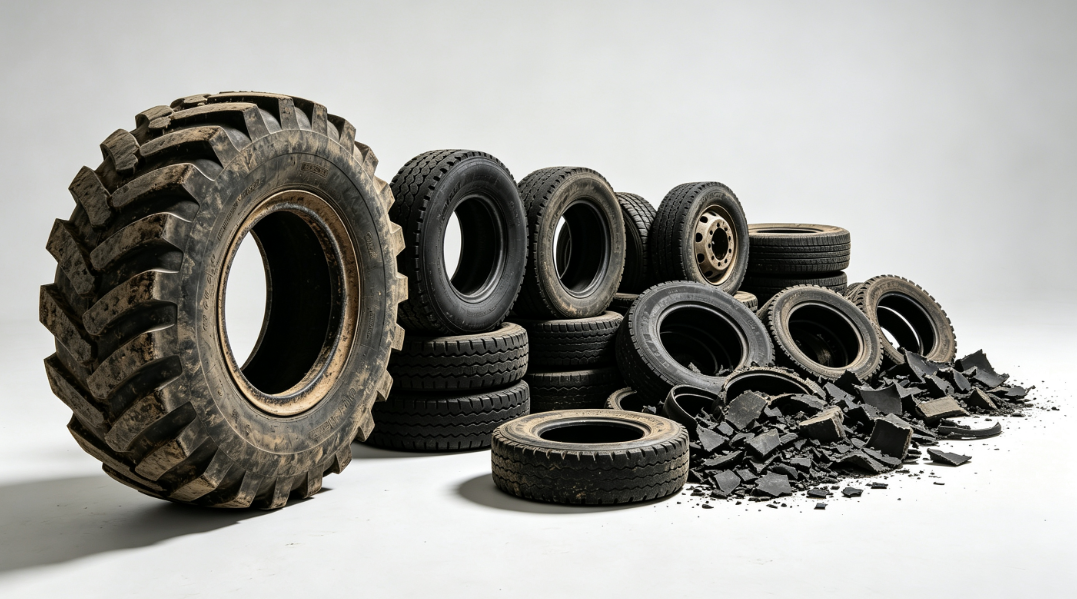







The global demand for recycled rubber products continues to grow as governments and industries seek sustainable solutions for waste tire management. For investors entering the tire recycling industry, a small-scale 1TPH tire recycling line offers an attractive balance between investment cost, production efficiency, and environmental compliance.
If you are considering purchasing a tire granulator machine, understanding the complete production process, equipment configuration, operating costs, and product applications is essential before making an investment decision.
Why Choose a 1TPH Tire Recycling Line?
A 1-ton-per-hour tire recycling line is one of the most popular configurations for small and medium-sized recycling businesses.
Its advantages include:
- Lower initial investment compared to large-scale plants
- Easy installation and operation
- Compliance with environmental regulations
- Stable production of high-quality rubber granules
This type of production line is suitable for entrepreneurs, waste tire collection companies, and recycling plants looking to enter the market with controlled risk.
Core Equipment of a 1TPH Tire Recycling Line
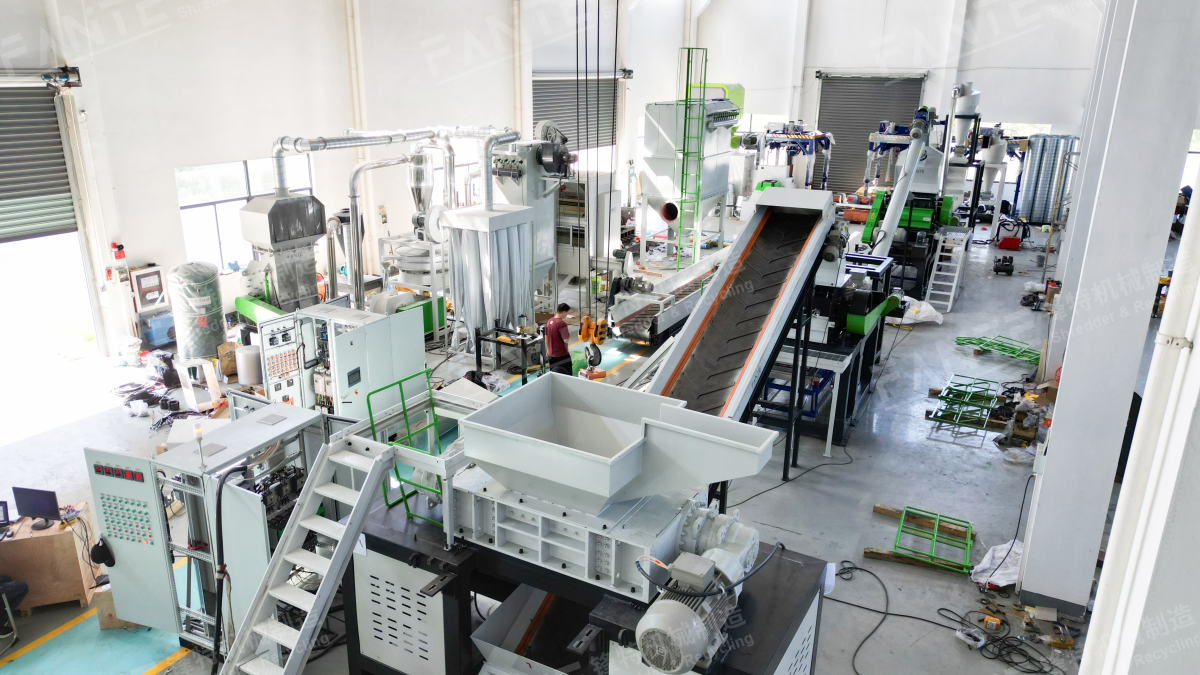
A standard tire granule production line consists of five key machines. Each machine performs a specific function to ensure efficient material recovery and high-quality finished products.
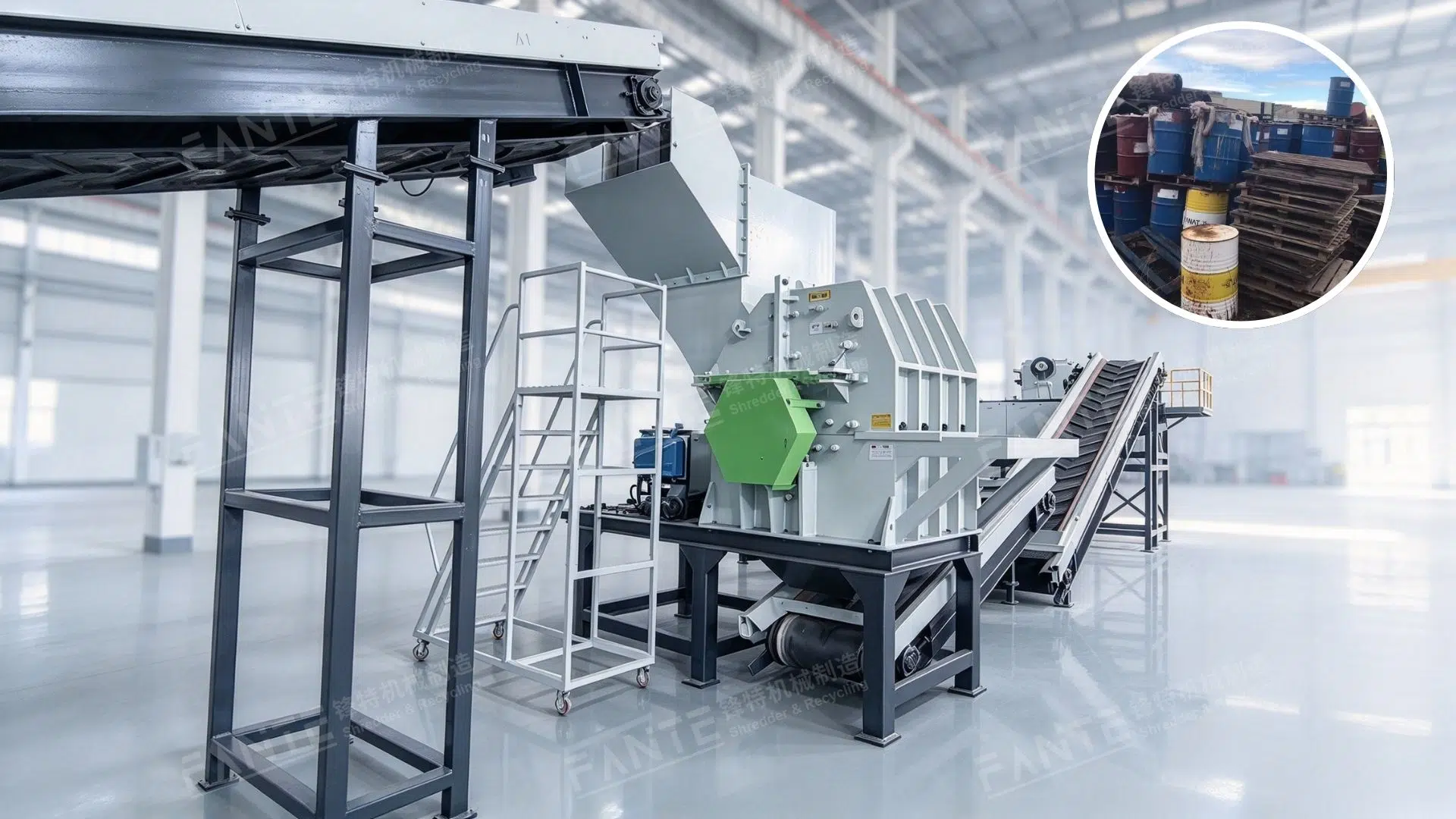
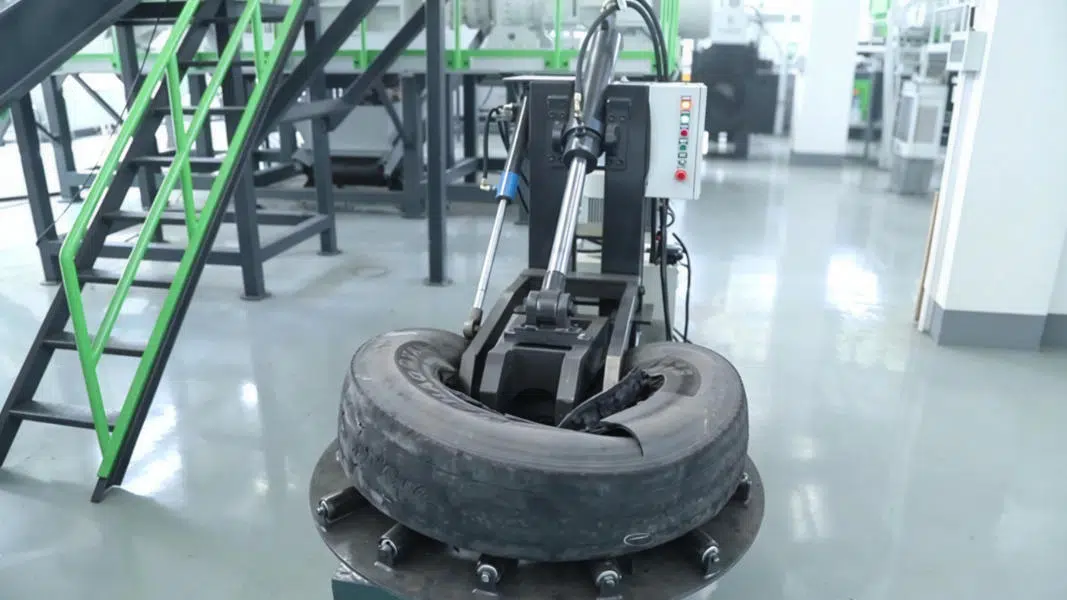
Déchiqueteuse de pneus: The First Step in Tire Processing
The tire shredder is the foundation of the entire recycling system.
Its primary function is to process whole waste tires into smaller rubber chips suitable for downstream treatment.
Selection Considerations
When choosing a tire shredder, important factors include:
- Tire size range
- Capacité de traitement
- Blade material
- Motor power
- Maintenance requirements
A high-quality tire granulator machine can efficiently process passenger car tires, truck tires, and light OTR tires while maintaining stable output and low operating costs.
Avantages
- Uniform output size
- Reduced load on downstream equipment
- High throughput capacity
- Long service life
séparateur de fils d'acier pour pneus: Efficient Steel Wire Separation
After shredding, tire chips enter the tire rasper.
The rasper performs two critical functions:
- Further size reduction
- Separation of embedded steel wires
Through powerful tearing and grinding action, most steel wires are released from the rubber material.
Benefits
- Higher rubber purity
- Increased steel recovery value
- Improved performance of subsequent processing equipment
Efficient steel removal is essential for producing premium rubber granules.
Rubber Granulator: Producing Standard Rubber Granules
The rubber crusher further reduces the rubber material into granules smaller than 5mm.
Working Principle
The machine utilizes rotating and stationary knives to create continuous cutting action.
The particle size can be controlled through screen selection.
Key Advantages
- Stable granule size
- High production efficiency
- Consistent product quality
- Low energy consumption
The resulting rubber granules meet the requirements of many downstream industries.
Fiber Separator: Removing Textile Impurities
Even after steel separation, waste tire rubber still contains textile fibers.
The fiber separator removes these lightweight contaminants through airflow and vibration separation technologies.
Why Is It Important?
Without fiber separation:
- Product purity decreases
- Market value drops
- Customer quality requirements may not be met
A properly designed fiber separation system significantly improves finished product quality.
Pulse Dust Collector: Environmental Protection and Clean Production
Dust generation is unavoidable during tire recycling.
A pulse dust collector captures airborne particles and maintains a clean working environment.
Avantages pour l'environnement
- Reduced dust emissions
- Improved workplace safety
- Compliance with environmental regulations
- Better equipment reliability
Modern tire recycling plants rely on efficient dust collection systems to achieve sustainable operation.
Applications of 5mm Rubber Granules
High-quality rubber granules have broad market demand.
Common applications include:
Sports Surfaces
- Running tracks
- Artificial turf infill
- Playgrounds
Rubber Products
- Rubber mats
- Rubber tiles
- Shock absorption materials
Road Construction
- Rubber-modified asphalt
- Pavement additives
Industrial Applications
- Vibration damping materials
- Molded rubber products
Stable demand for these applications supports long-term profitability.
Frequently Asked Questions
Does 1TPH Mean One Ton of Finished Product Per Hour?
No.
1TPH refers to the input capacity of waste tires processed per hour.
Actual output depends on tire composition and impurity content.
How Much Can the Line Produce Per Day?
Assuming 8 working hours per day:
- Input capacity: approximately 8 tons of waste tires
- Annual production depends on operating hours and local conditions
Many customers operate two shifts to maximize equipment utilization.
What Are the Main Wear Parts?
The most common wear parts include:
- Shredder blades
- Rasper blades
- Crusher knives
- Screens
Regular inspection helps maximize service life.
How Should Daily Maintenance Be Performed?
Recommended maintenance includes:
- Lubricating bearings
- Checking blade wear
- Inspecting belts and motors
- Cleaning dust collection systems
- Tightening electrical connections
Preventive maintenance significantly reduces downtime and repair costs.
Conclusion
For entrepreneurs and recycling companies entering the waste tire industry, a 1TPH tire recycling line offers an excellent starting point. With a reasonable investment, stable operating costs, and diverse end-product applications, it provides a practical pathway into the growing circular economy sector.
A properly configured tire granulator machine combined with steel separation, granulation, fiber removal, and dust collection systems can transform waste tires into valuable rubber resources while meeting modern environmental standards.
If you are planning to start a tire recycling project, contact our engineering team for customized equipment recommendations and complete plant design solutions.