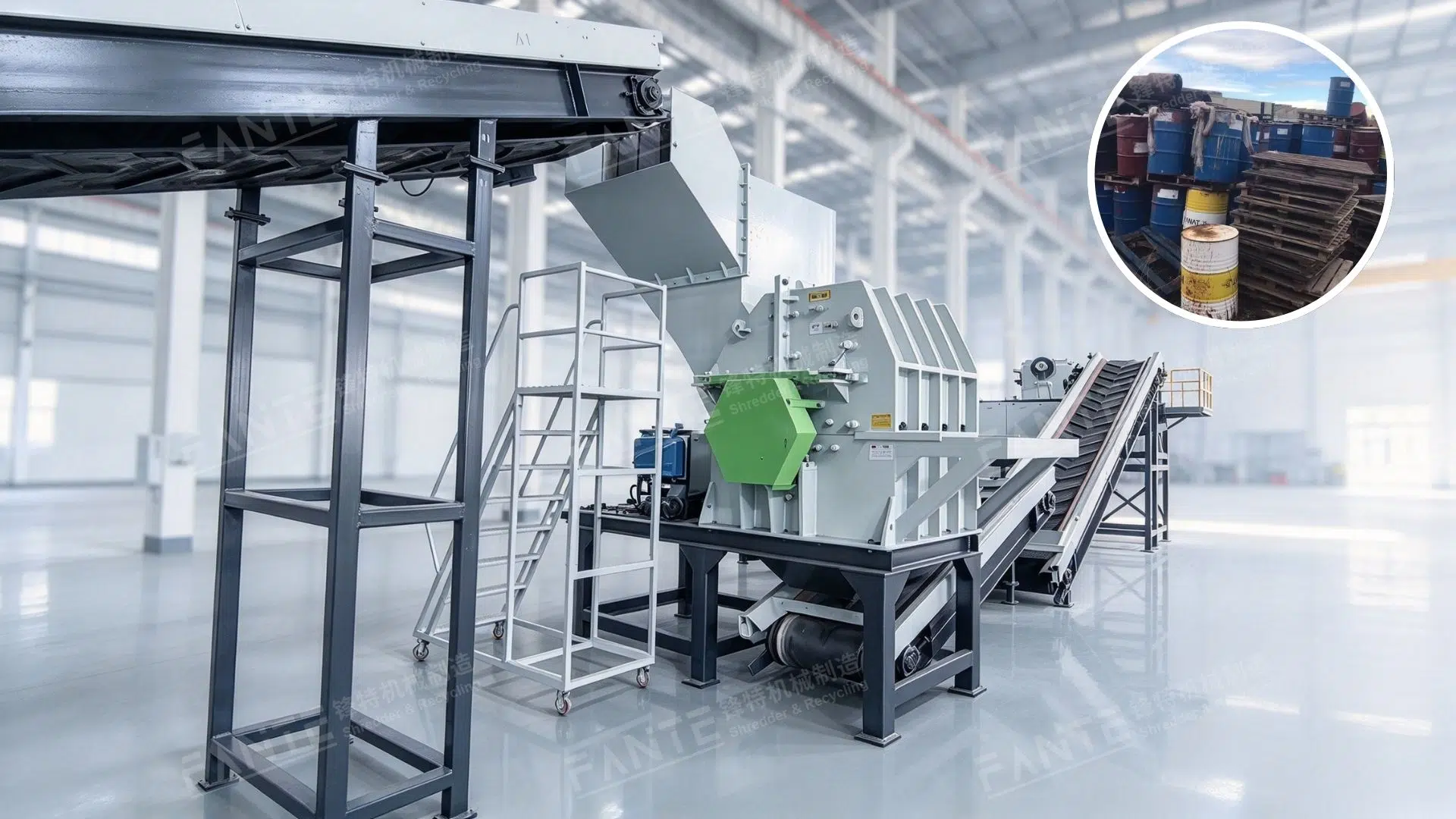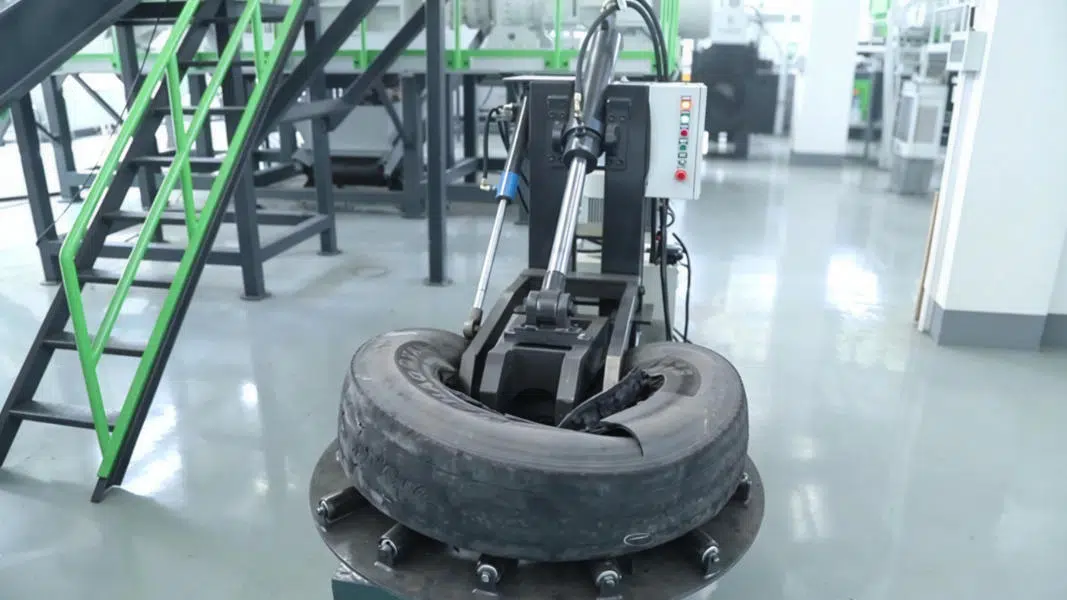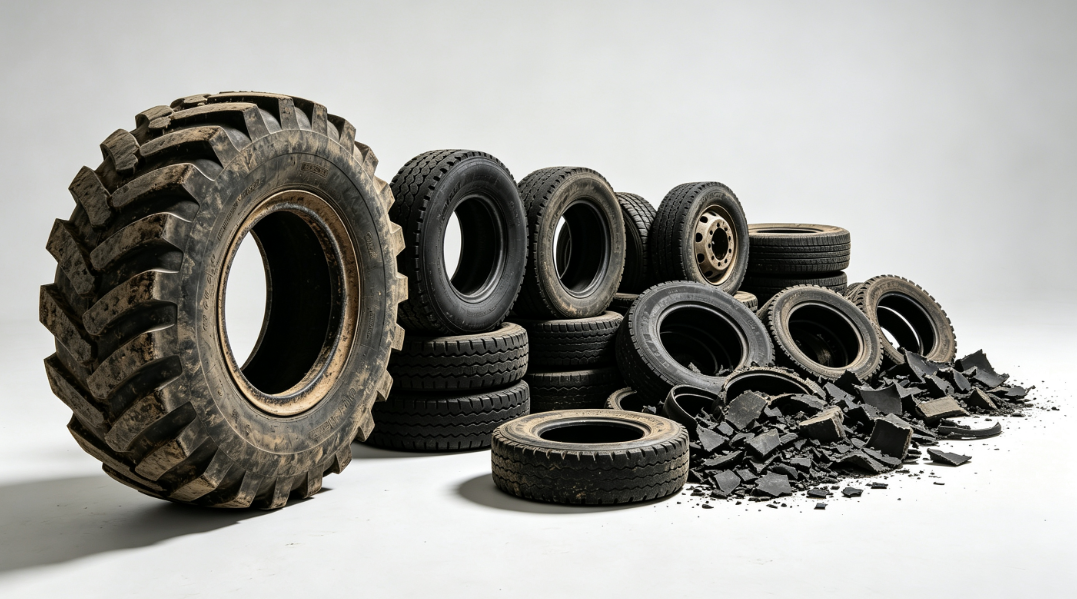







As the global volume of waste tires continues to rise, the tire recycling industry is shifting from simple processing toward high-value resource utilization. Through specialized equipment, converting scrap tires into usable resources such as rubber granules, rubber powder, steel cord, and fibers.
However, many tire recycling enterprises face a common challenge during actual production: why is the purity of the resulting rubber granules often low?
Key factors affecting rubber granule quality include residual steel wire, fiber impurities, equipment configuration, and production processes. Among these, the effective removal of fiber impurities is a crucial step in enhancing granule purity.
In a comprehensive tire recycling production line, a fiber separator effectively removes nylon fibers and lightweight impurities from the rubber granules, enabling the final product to meet higher application standards.
Where do fiber impurities in waste tires come from?
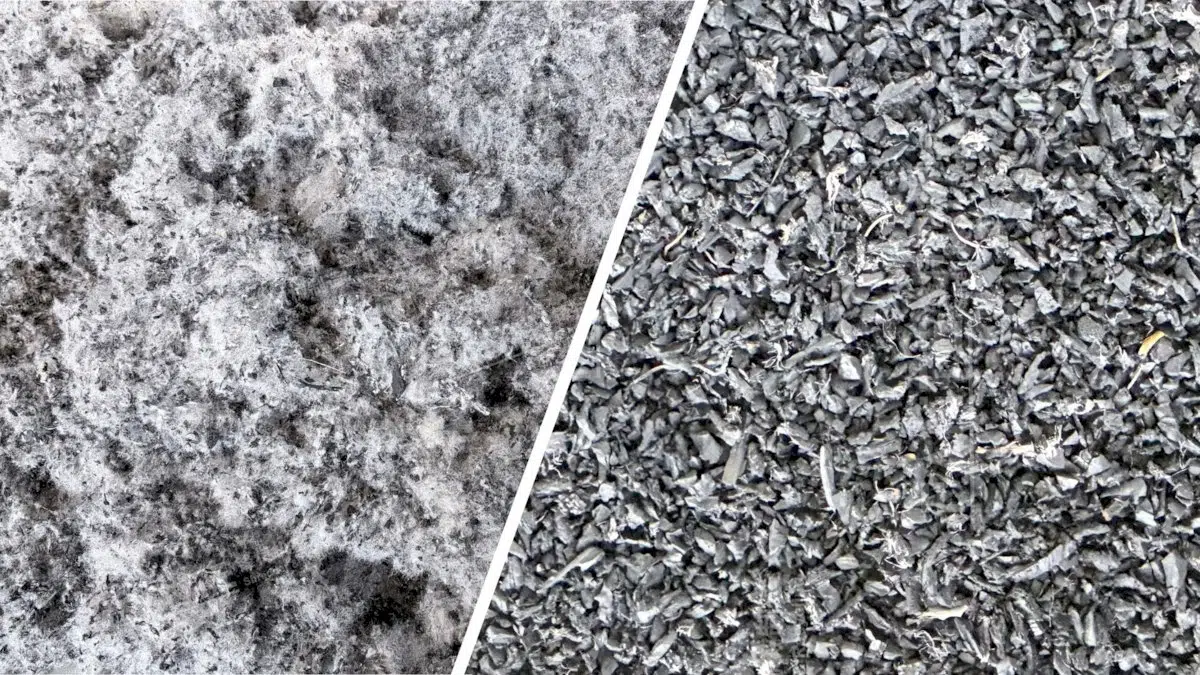
Automotive, truck, and off-the-road (OTR) tires contain not only rubber and steel wire but also a certain proportion of textile fibers.
These fibers serve primarily to reinforce the tire structure, enhancing strength and durability.
During the tire shredding process:
- Rubber is cut into granules.
- Steel wire is gradually exposed and separated.
- Nylon fibers become mixed with the rubber granules.
Failure to effectively remove these fibers directly compromises the quality of the rubber granules.
How do fiber impurities affect rubber granules?
1. Reduced product purity
High-quality rubber granules generally require low fiber content.
Excessive residual fiber leads to:
- Uneven product color
- Increased impurity levels
- Reduced rubber content
This impacts the product’s selling price and market competitiveness.
2. Limited application scope
Different application fields have varying requirements for rubber granule purity.
For example:
Rubber floor mats
Require high-purity rubber granules to ensure product quality and appearance.
Sports surfaces
Require uniform granules with minimal impurities like fibers.
Rubber-modified asphalt
Requires a stable rubber composition to enhance road material performance.
Therefore, improving granule purity expands the market for the product.
How does a fiber separator improve rubber granule purity?
In the tire recycling process, fiber separation typically takes place after shredding and screening.
Its primary operating principle involves using airflow and differences in material weight to separate lightweight fibers from the rubber granules. Workflow:
- Rubber granules enter the separation zone;
- Airflow carries away lightweight fibers;
- Heavier rubber granules continue to be conveyed downward;
- Separated fibers are collected centrally.
This process significantly reduces fiber content in the finished product and increases the purity of the rubber granules.
How to choose the right fiber separation equipment?
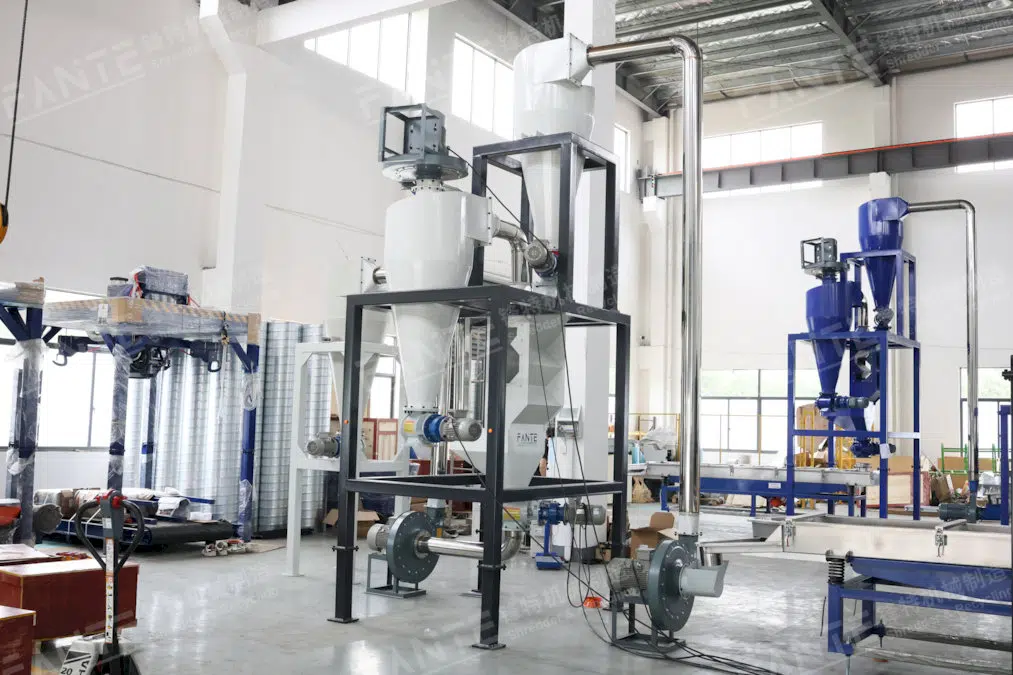
Different tire recycling projects have varying equipment requirements; the following factors should be considered when making a selection:
- Select equipment specifications based on throughput
Small-scale tire recycling lines and large-scale industrial production lines require separation equipment with matching processing capacities.
Insufficient equipment throughput can impact overall production efficiency.
- Adjust separation performance based on product requirements
If the target product is high-quality rubber granules or rubber powder, a more efficient fiber removal solution is required.
Proper configuration of the separation system can reduce the need for reprocessing and improve production efficiency.
- Integrate with the complete tire recycling process
Improving the performance of a single piece of equipment does not guarantee overall product quality.
High-quality rubber granules typically require:
- High-efficiency tire shredder
- Steel wire separation equipment
- Rubber crushing equipment
- Fiber separation system
Stable production is achieved only through the integration of a complete process.
Other methods to improve the purity of recycled tire granules
In addition to using fiber separation equipment, attention should be paid to the following areas:
Regular blade maintenance
Sharp blades reduce excessive rubber fragmentation and improve granule uniformity.
Control feed rate
Stable feeding prevents fluctuations in equipment load and improves separation efficiency.
Optimize screen size
Different product specifications require matching screens to ensure consistent particle size.
Regular equipment cleaning
Minimizing material buildup inside the equipment ensures stable, long-term operation.
Commercial value of high-purity rubber granules
Increasing rubber granule purity not only improves product quality but also boosts corporate profitability.
High-purity granules offer:
- Higher selling prices
- Broader application areas
- More stable customer demand
- Stronger market competitiveness
For tire recycling enterprises, optimizing production processes and enhancing product quality are key strategies for achieving long-term profitability.
Schlussfolgerung
Used tire recycling is both an environmental initiative and a resource recovery industry. Improving rubber granule purity requires optimization across equipment configuration, production workflows, and quality control.
Among these elements, the fiber separator is a crucial piece of equipment for removing fiber impurities and enhancing granule quality. By properly configuring fiber separation systems and integrating high-efficiency equipment for tire shredding, steel wire separation, and granulation, enterprises can produce high-value rubber granules, thereby transforming waste tires into usable resources.
If you are planning a tire recycling project, selecting professional equipment solutions and proven process designs will help you enhance production efficiency and achieve a superior return on investment.