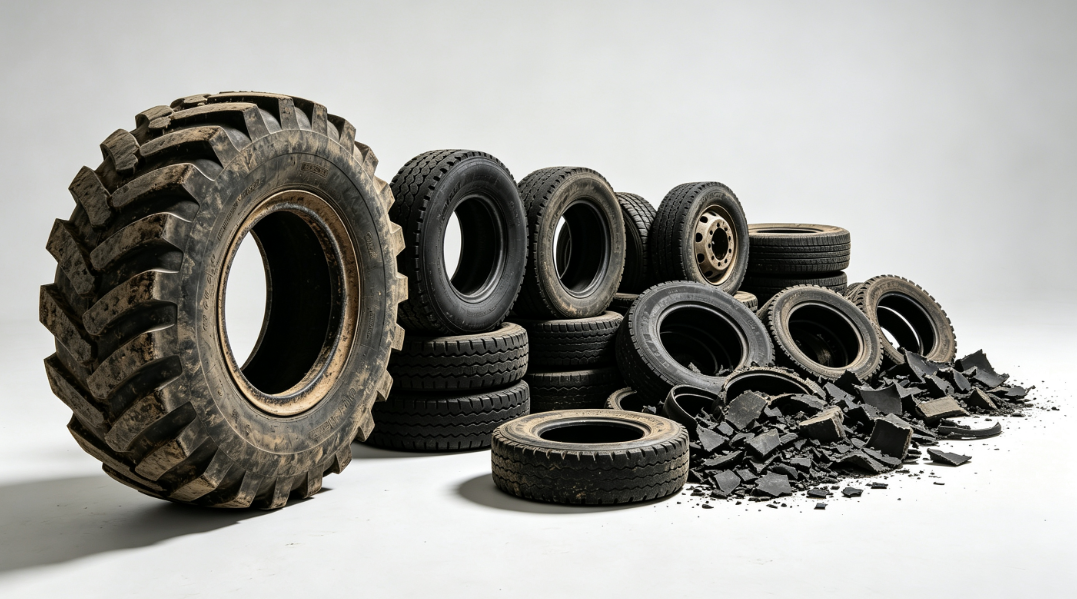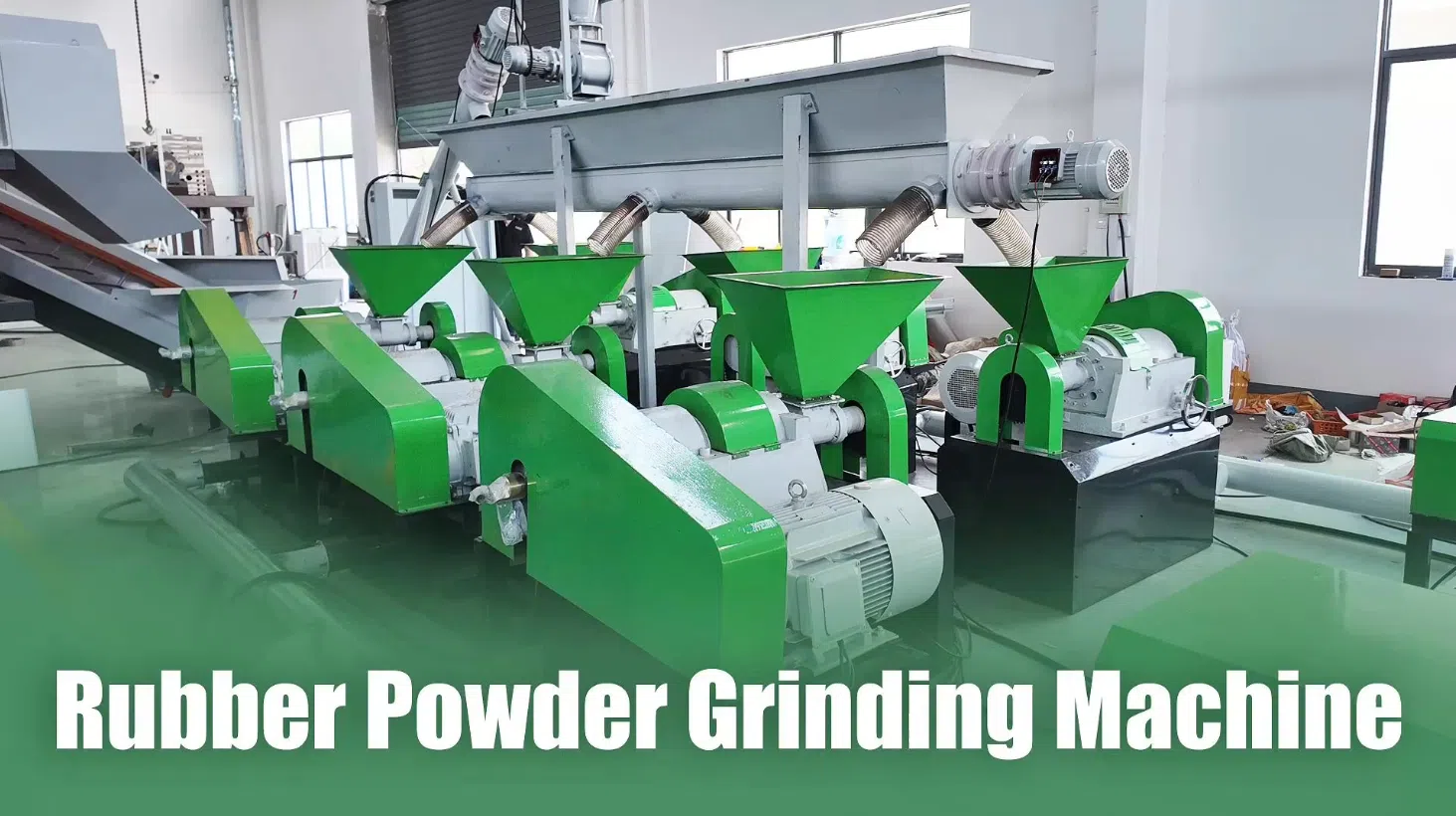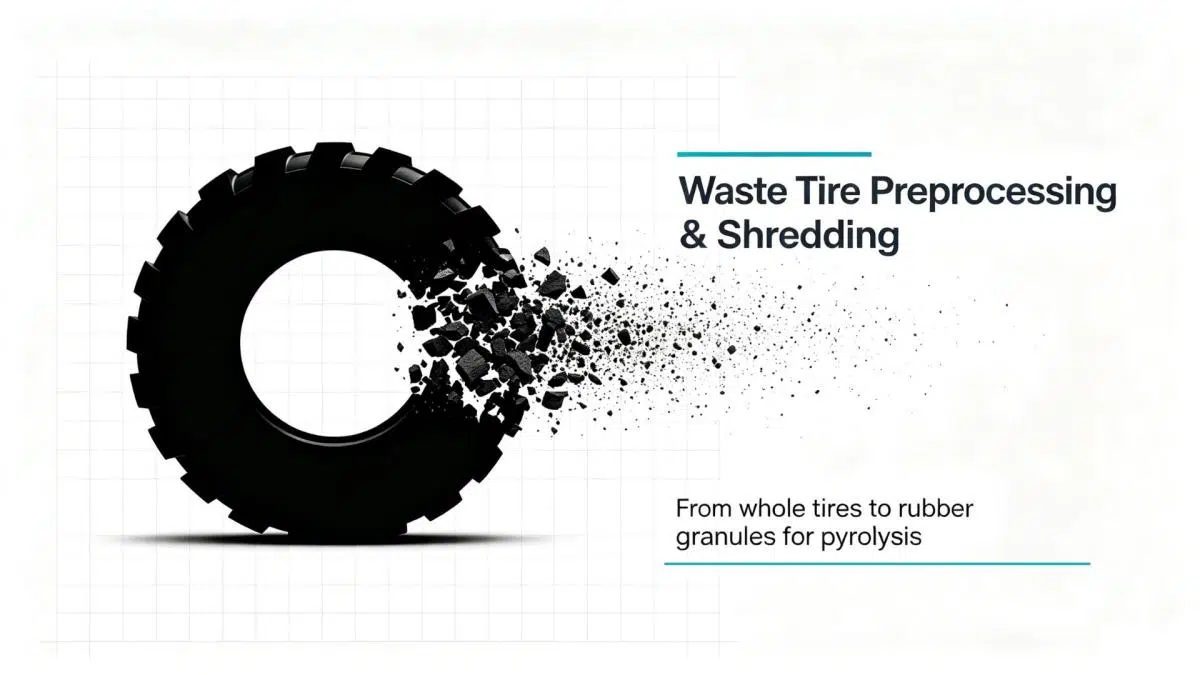







A tire cutting machine is used to cut whole or large waste tires into smaller sections before further processing. It is particularly useful for truck, agricultural, and large tires that are difficult to handle or feed directly into downstream equipment. The cutting operation reduces tire size and improves feeding stability without replacing the main shredding process.
What Does a Tire Cutting Machine Do?
The main function is to mechanically cut bulky tires into manageable sections.
Depending on the machine configuration, cutting can be used to:
- Reduce the overall size of large tires
- Cut tire sidewalls or bead sections
- Prepare oversized tires for shredding
- Improve feeding into downstream equipment
- Reduce manual handling of heavy tires
A cutting machine is therefore mainly a pre-processing machine. It does not normally produce the final rubber particle size required by a recycling line.
How Does a Tire Cutting Machine Work?
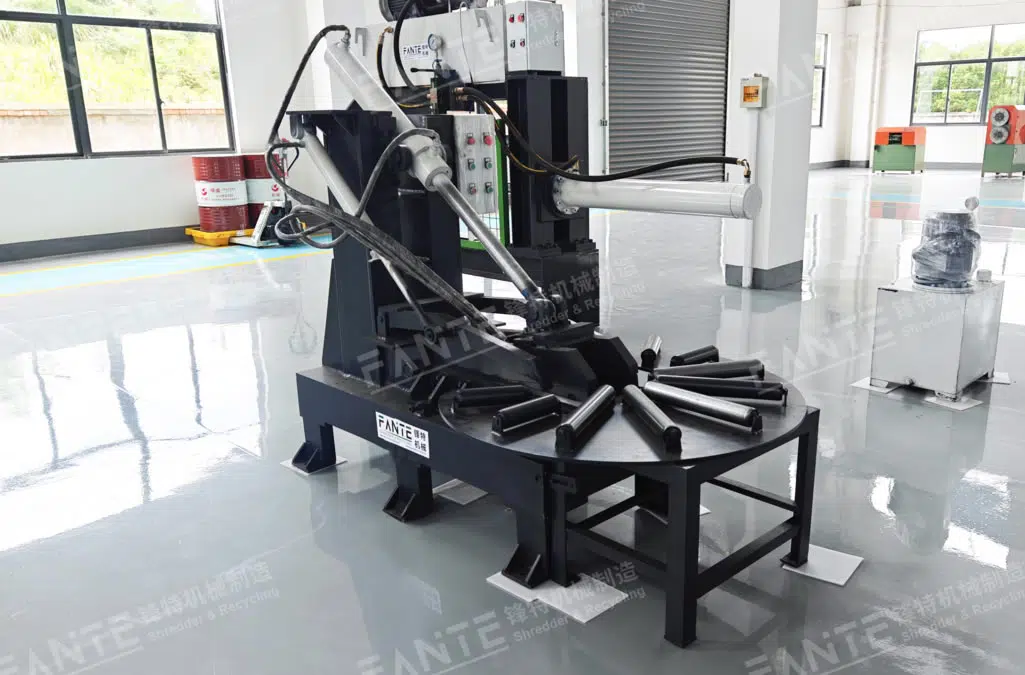
A hydraulic cutter typically uses a support platform, positioning system, hydraulic cylinder, and heavy-duty cutting blade.
The tire is placed securely in the cutting position. The hydraulic system then drives the blade through the rubber and steel-reinforced structure. After the cutting stroke, the tire is repositioned if additional sections are required.
The cutting force must overcome both rubber resistance and embedded steel reinforcement. Stable tire positioning is therefore important for efficient cutting.
For large tires, hydraulic cutting provides high force at relatively controlled cutting speed, making it suitable for thick and heavily reinforced tires.
Which Tires Need Cutting Before Shredding?
Not every waste tire requires a separate cutting stage.
Passenger tires are generally easier to handle and can often be fed directly into a suitable primary shredder.
Large truck, agricultural, and OTR tires are different. Their diameter, weight, sidewall thickness, and steel reinforcement can make direct feeding more difficult.
Pre-cutting can be considered when:
- The tire diameter exceeds the shredder’s practical feeding range
- The tire is too heavy for stable automatic feeding
- Thick sidewalls create excessive cutting resistance
- The project requires controlled pre-sized sections
- The shredder needs smaller feed pieces
For very large OTR tires, the cutting method should be matched to the tire dimensions and downstream shredder capacity.
What Is the Difference Between Tire Cutting and Tire Shredding?
Cutting and shredding perform different mechanical functions.
A cutter uses a defined cutting stroke to divide a whole tire into large sections. A shredder uses rotating shafts and cutting knives to continuously tear and shear the material into smaller pieces.
Therefore:
Tire cutting: prepares oversized tires for easier handling and feeding.
Tire shredding: performs continuous size reduction to the required shred size.
Using a cutter does not eliminate the need for a shredder when the project requires controlled tire chips or further rubber processing.
Schlussfolgerung
A tire cutting machine is mainly used when whole or oversized tires are difficult to handle or feed directly into the next processing stage. Its value lies in reducing tire dimensions and improving feed control before shredding or other downstream processing.
For passenger tires, direct shredding may be sufficient. For large truck, agricultural, or OTR tires, pre-cutting or sidewall removal can provide a more practical feeding solution.
The correct configuration depends on tire dimensions, construction, cutting requirements, and the capacity of the downstream equipment.