






How a Copper Wire Granulator Works?
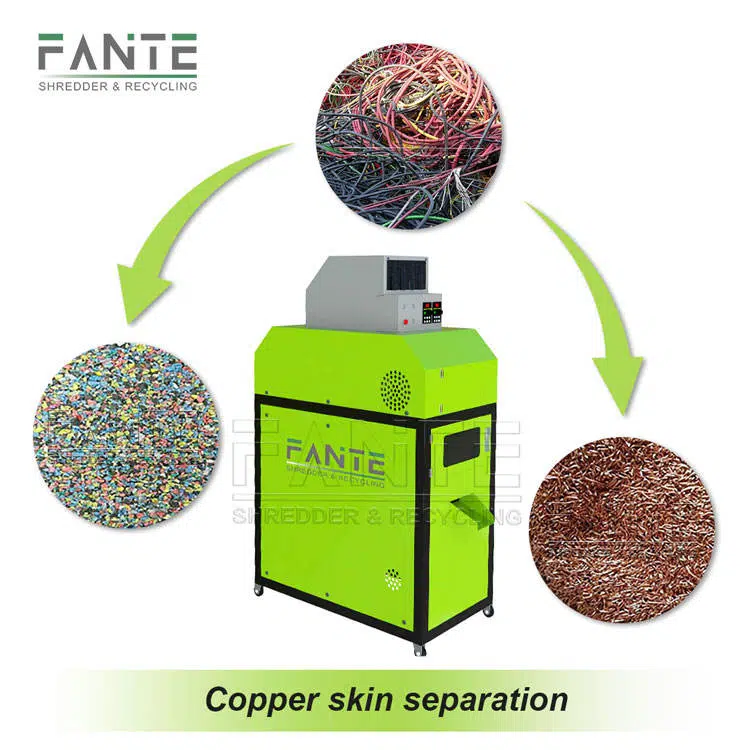
A copper wire granulator cuts scrap cable into particles and separates the copper from insulation. Granulation releases the materials from one another; airflow and vibration then assist their separation. The exact process depends on the cable and machine configuration.
1. Check and Prepare the Feedstock
Identify the conductor material, cable dimensions, insulation and contaminants. Feed preparation may involve sorting, cutting or pre-shredding, depending on the material limits of the selected equipment.
2. Granulate the Cable
Cutting tools reduce the cable into smaller particles. The cutting system, screen where fitted, tool condition and feeding rate affect the material reaching the separation stage.
3. Separate Copper and Insulation
Airflow and vibration help separate particles with different physical properties. Adjustment must consider the incoming material and desired result. An unsuitable setting can leave copper in the insulation fraction or insulation in the recovered copper.
4. Collect Material and Manage Dust
Assess the recovered copper, separated insulation and collected dust. Dust handling and maintenance are part of the system setup and should be considered alongside throughput.
Recovery, Purity and Throughput Are Different Measures
| Recovery | The proportion of copper entering the process that is recovered; define how copper in each output is sampled. |
|---|---|
| Purity | The copper content of the recovered product; it is not the same as copper recovery. |
| Throughput | The amount processed over time; state whether it is incoming cable or recovered product. |
Choose the Machine Around Your Cable
Compare the FTG-03 mini copper wire granulator with larger copper wire recycling configurations using the same material and measurement basis. Model names and motor power alone are not enough to compare production results.
Frequently Asked Questions
Does granulation mean stripping every cable first?
No. Granulation reduces the cable and its insulation into a mixture that is then separated. Whether an additional preparation or stripping step is appropriate depends on the particular cable and proposed process.
Does a high purity figure prove high copper recovery?
No. A clean recovered product can still leave copper in another output. Evaluate recovered product quality and copper losses separately using an agreed sampling method.
What should I send when requesting a recommendation?
Provide representative cable photos, conductor and insulation details, the cable-size range, desired processing rate, output-quality requirements and site power information.
Discuss your scrap wire and equipment requirements.
Choose a Machine for Your Scrap Wire
Use your cable material, dimensions, required processing rate and electrical supply to compare configurations. Explore our copper wire granulator range, review the FTG-03 mini granulator, or discuss a complete wire recycling line. Send material photographs and your target output when requesting a quotation.