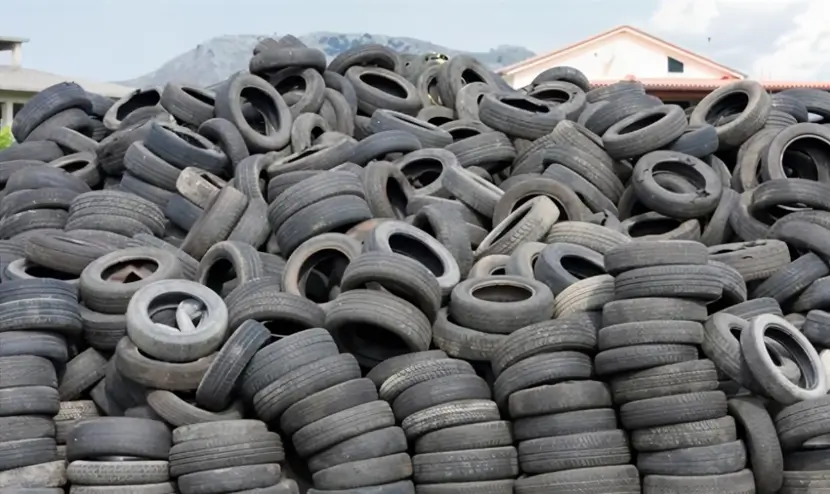







Due to its extremely slow natural degradation process and rapidly increasing production, waste rubber has become a rapidly spreading black pollution worldwide. Waste rubber primarily comes from scrap tires and other industrial products, with scrap tires accounting for over 90% of all waste rubber.
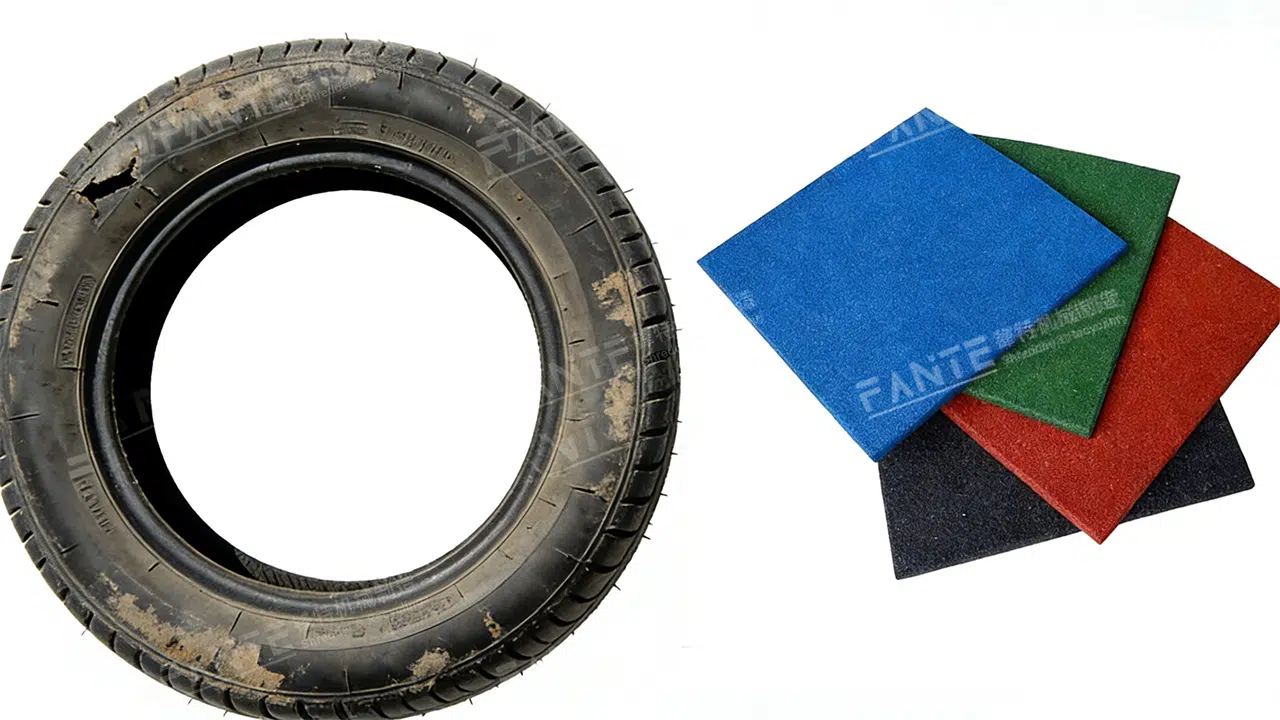
Waste tires can be used directly for other purposes, such as ship buffers, artificial reefs, breakwaters, road guardrails, soil and water conservation barriers, and as building soundproofing panels. They can also be used as barrel containers for sewage and oil sludge composting. They can also be broken down and cut into floor mats, shoe soles, and gaskets, and cut into base or surface materials for floor filling. However, these utilization methods can only process a small amount of waste tires.
The most common way tires are damaged during use is severe tread damage, which has led to widespread attention worldwide. Tire retreading involves grinding away the tread rubber from old tires, then performing a partial repair and reapplying of the tread rubber, followed by vulcanization, to restore their usability. Tire retreading can extend the service life of tires and make the best use of them. At the same time, due to the extension of the life cycle, it can also promote the reduction of waste tires.
Waste tires are processed into rubber powder
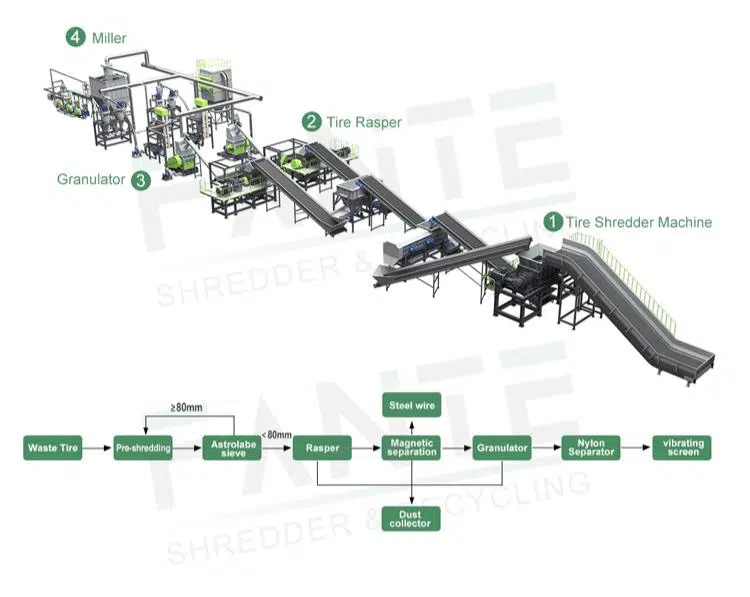
Besides simple processing, waste tires can also be used to produce rubber powder. Rubber powder is the extremely fine rubber particles obtained by crushing waste tires. Rubber powder can be categorized by particle size into coarse, fine, micro, and ultrafine rubber powders. Coarse rubber powder is relatively simple to manufacture and has little recycling value. Fine rubber powder, however, has a small particle size and a very large specific surface area and can meet the stringent requirements for manufacturing high-quality products, resulting in high market demand. Rubber powder has a wide range of applications and can generally be divided into two main areas: one is in the rubber industry, where it can be directly molded or combined with virgin rubber to create products; the other is in non-rubber industries, such as modified asphalt pavement, modified asphalt waterproofing membranes, and coatings and protective layers in the construction industry.
Pyrolysis of Waste Tires
Pyrolysis of waste tires uses external heating to initiate chemical chains, breaking down organic matter into valuable chemical products such as fuel gas, aromatic-rich oil, and carbon black. Waste tires can also be co-liquefied with coal to produce light distillate oil. Pyrolysis temperatures generally range from 250°C to 500°C.
Waste tires are processed into TDF
Tires have a high calorific value (2937 MJ/kg). Waste tires can be used as fuel in cement kilns and burned to generate electricity. The heat generated by the combustion of rubber and carbon black in the waste tires can be used to make cement, while the sulfur and iron in the tires also serve as essential cement components. The process follows: waste tires are sheared and crushed before being fed into a cement kiln, where they are burned at temperatures around 1500°C. The sulfur in the tires is ultimately oxidized to SO₂, which then combines with lime, a raw material for cement, to form CaSO₂, thereby preventing SO₂ from polluting the atmosphere. The metal wire in the tires reacts with oxygen at high temperatures to form Fe₂O, which then reacts with CaO and Al₂O, also components of cement.