






A tire grinding machine is designed to grind pre-processed tire rubber granules into fine rubber powder. The recommended feed size is 1–4 mm, with a typical final fineness of 30–120 mesh. The required mesh size depends mainly on the intended application.
What Feed Size Does Tire Grinding Require?
Tire grinding equipment is not designed to process whole tires or large rubber chips directly.
The recommended feed is 1–4 mm rubber granules. Consistent feed size helps maintain stable grinding conditions and reduces unnecessary load on the grinding components.
Residual steel should also be removed as much as possible before fine grinding. Fine steel wire can increase component wear and affect the cleanliness of the finished powder.
How Fine Can a Tire Rubber Grinding Machine Grind?
A tire rubber grinding machine can produce approximately 30–120 mesh rubber powder.
The final fineness is affected by the grinding gap, feed characteristics, operating conditions, and screening. Coarser powder requires less grinding intensity, while finer powder requires more controlled grinding and heat management.
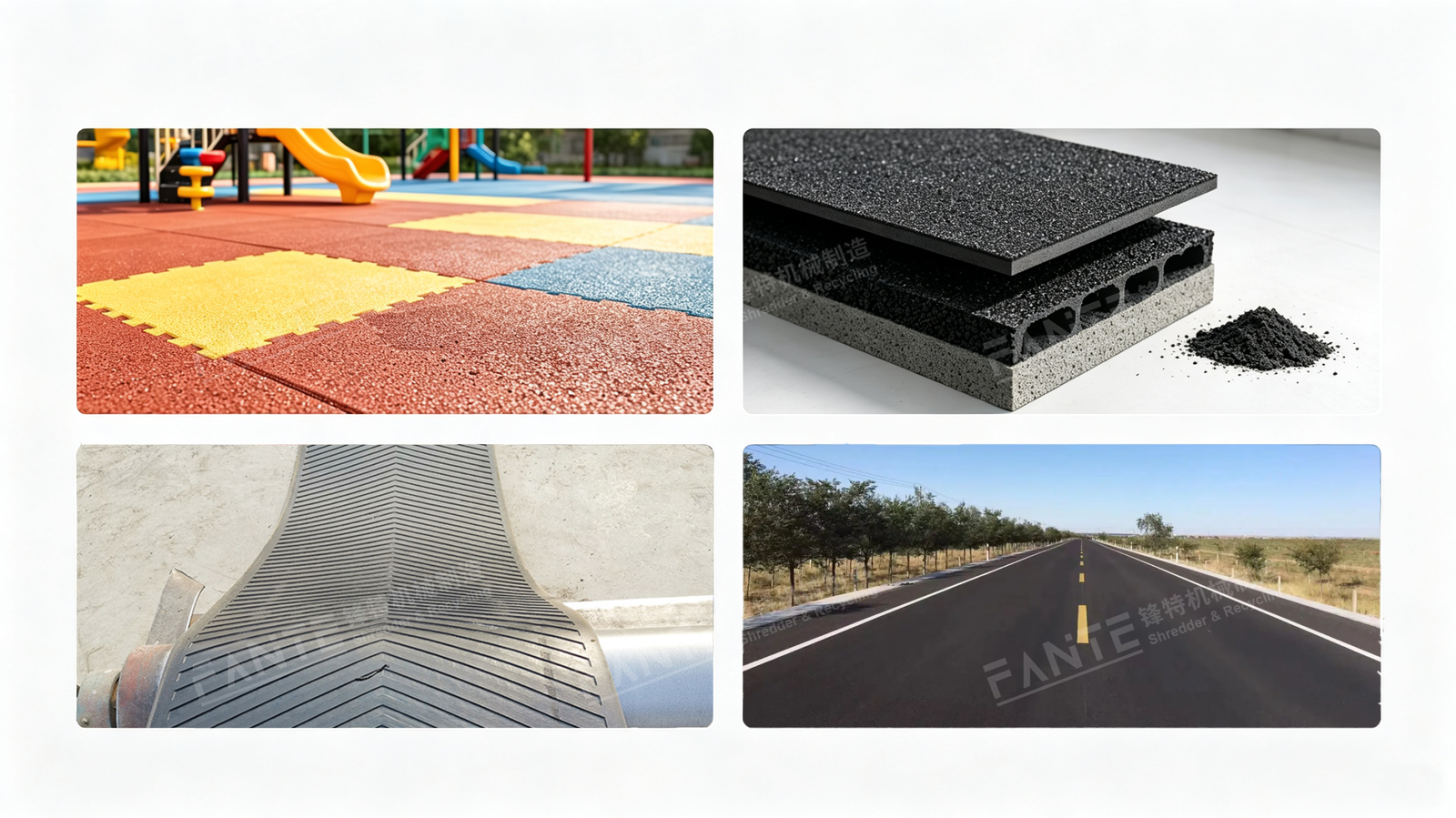
Typical applications and recommended mesh sizes include:
| आवेदन | Recommended Mesh Size |
|---|---|
| Playground flooring | 30 mesh |
| Gym flooring tiles and mats | 30–60 mesh |
| Sports flooring and underlayment | 60 mesh |
| Asphalt pavement | 30-60 mesh |
| Adhesives and polyurethane binders | 60 mesh |
| Industrial rubber molding | 30 mesh |
| Conveyor belt manufacturing | 30 mesh |
| Footwear sole compounds | 40–80 mesh |
| Acoustical Underlayment | 30–40 mesh |
The actual specification should be confirmed according to the customer’s product formulation and production requirements.
Why Is Temperature Control Important?
Fine grinding generates heat through friction. The finer the target powder, the more attention should be paid to grinding temperature.
Excessive temperature can affect continuous operation and powder quality. A suitable cooling system helps maintain stable grinding conditions during long production runs.
Temperature control is especially important when producing finer grades such as 60–120 mesh powder.
How Does Screening Affect Powder Quality?
Screening separates qualified powder from oversized material.
A properly matched screen prevents larger particles from entering the finished product. Oversized material can be returned for additional grinding when required.
This helps maintain a more consistent particle-size distribution and reduces uncontrolled oversize in the final rubber powder.
अक्सर पूछे जाने वाले प्रश्न
The recommended feed size is 1–4 mm rubber granules. The material should contain minimal residual steel.
The typical range is approximately 30–120 mesh, depending on the grinding conditions and required fineness.
The required mesh depends on the application. For example, playground flooring commonly uses 30 mesh, while asphalt pavement and sports flooring commonly use around 60 mesh.