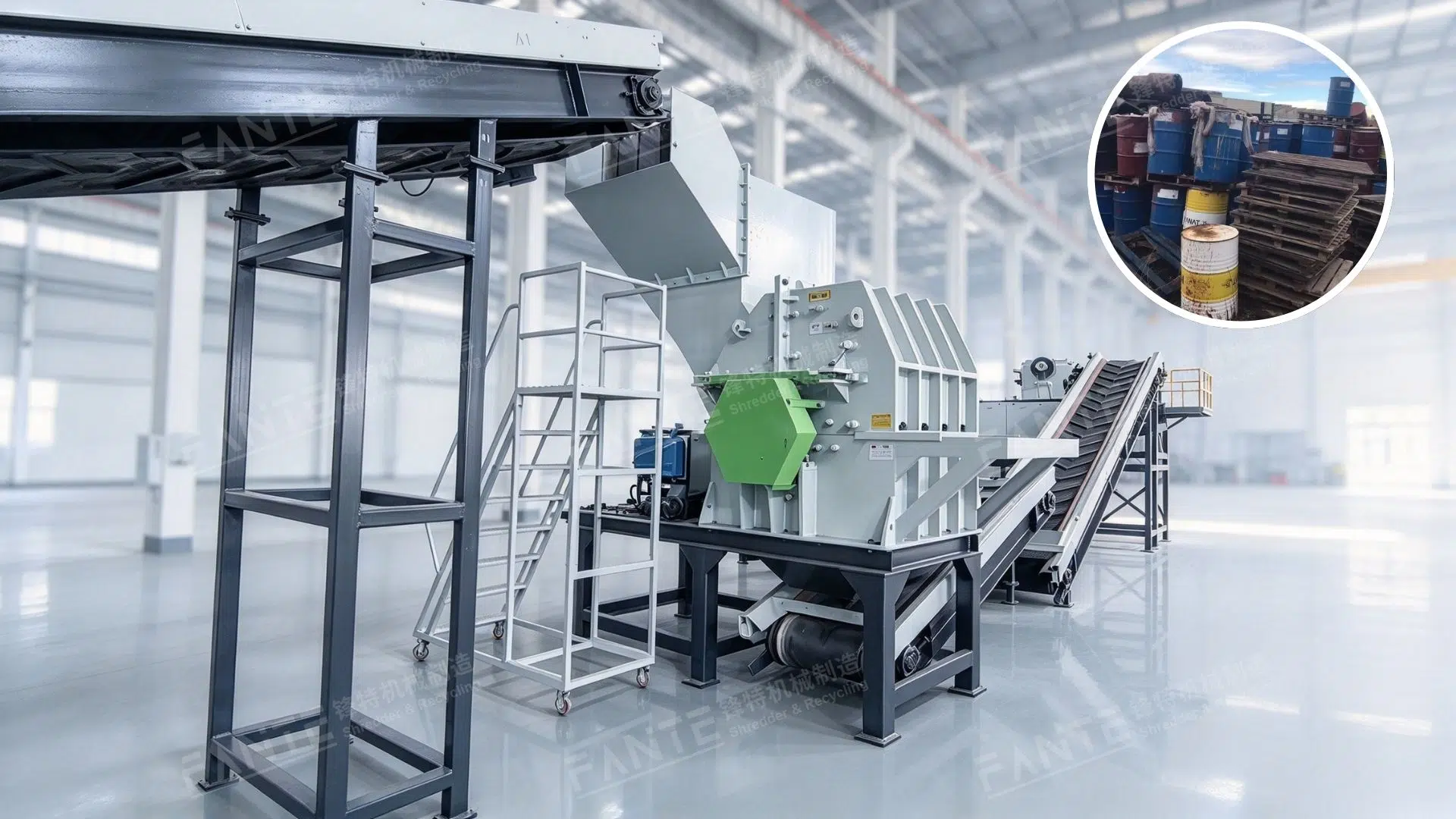
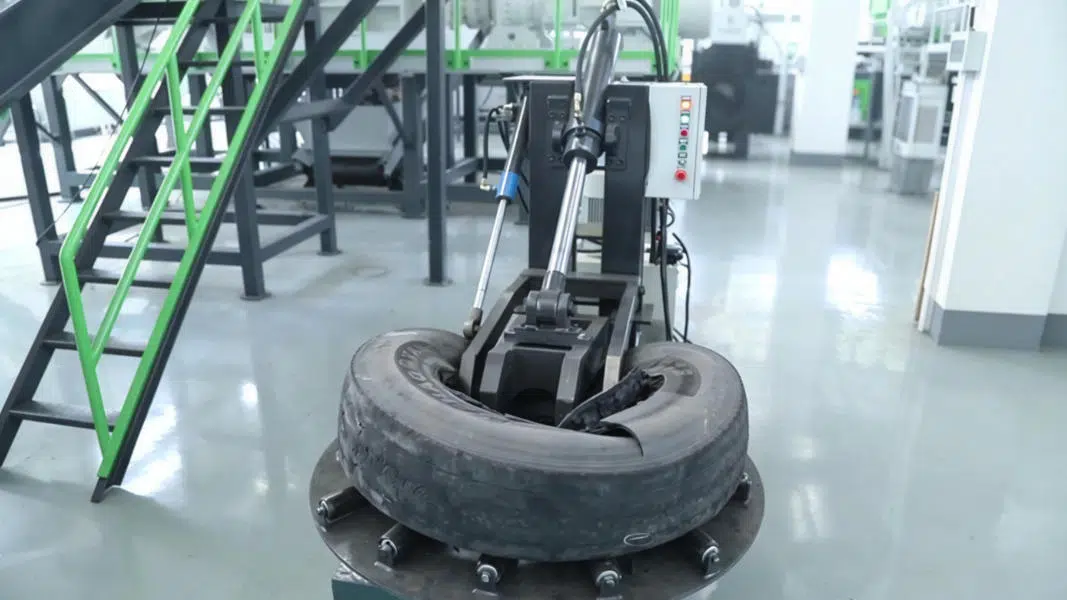
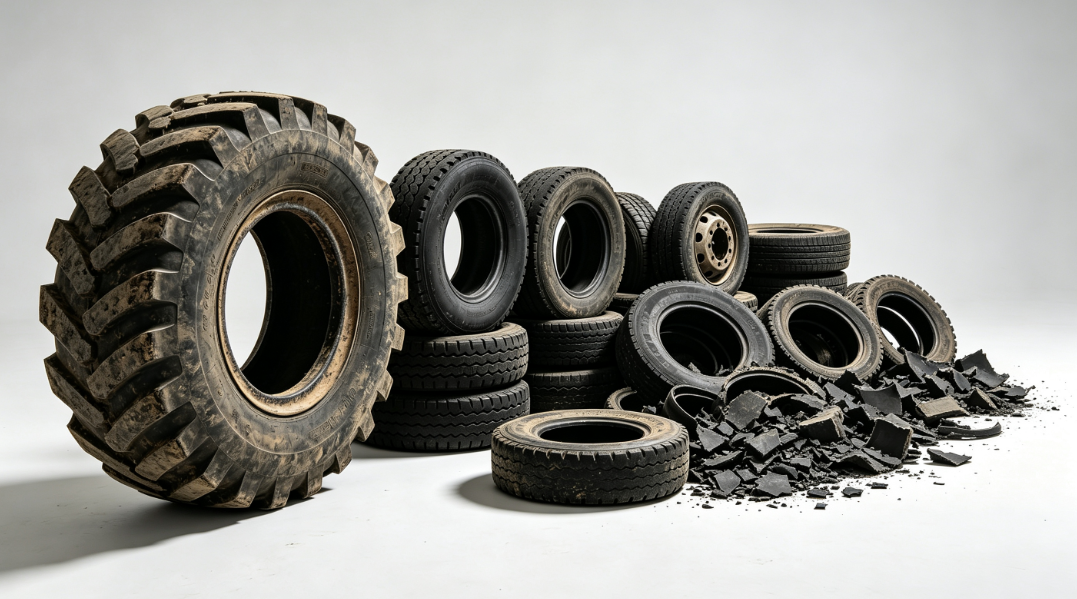
Producing rubber granule flooring from end-of-life tires requires a controlled process, from tire shredding and material separation to granule preparation and final molding. The right tyre recycling equipment helps convert discarded tires into clean, consistently sized rubber particles for flooring applications. However, the quality of the finished floor also depends on particle size, binder selection, mixing conditions, and curing control.
Understanding each production stage helps manufacturers choose a suitable process and achieve consistent product quality.
What Is Recycled Rubber Granule Flooring?
Recycled rubber granule flooring uses rubber particles recovered from used tires or other suitable rubber waste. Manufacturers combine these particles with a binder and shape the mixture into finished products.
Common applications include:
- Playground safety tiles: Designed to provide cushioning when the complete flooring system meets the required impact-attenuation standards.
- Gym and fitness flooring: Used for weight rooms, workout areas, and exercise facilities.
- Sports flooring: Used in selected indoor and outdoor sports applications.
- Rubber mats and interlocking tiles: Suitable for workshops, commercial facilities, and other areas requiring resilient flooring.
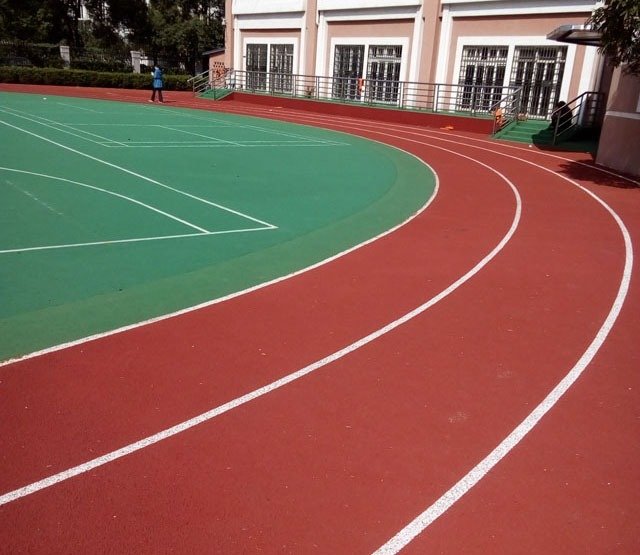
The required particle size, density, flexibility, and surface finish vary by application. Therefore, manufacturers should define the final product specifications before selecting the processing line.
Step 1: Grind the Rubber into Consistent Granules
After primary shredding and preliminary separation, the rubber undergoes further size reduction.
Granulators or other grinding machines reduce the rubber pieces into smaller particles. Screening then separates the material into specified size grades.
Why does granule size matter?
Particle size influences how the rubber packs together, how much binder the mixture requires, and how the finished surface looks and performs.
Coarser particles and finer granules can serve different product formulations. The correct grade depends on the tile design, required surface texture, production method, and performance targets.
There is no single particle size suitable for every rubber flooring product. The chosen granulation process should match the customer’s product specification rather than follow a universal size assumption.
Screening also helps control oversized particles and separates material that needs further grinding.
Step 2: Clean and Grade the Rubber Granules
Grinding alone does not guarantee a consistent raw material.
The granules may still contain residual fibers, fine dust, or particles outside the required size range.
Additional screening, magnetic separation, and fiber separation can be used according to the incoming material and product requirements. Dust extraction can also help manage airborne particles during processing.
Before mixing, manufacturers should check:
- Particle size distribution
- Residual steel and textile contamination
- Excessive fine dust
- Material consistency between batches
Stable raw material quality makes the downstream mixing and molding stages easier to control.
Step 3: Mix Granules with Binder and Additives
Clean rubber granules are blended with a suitable binder, commonly polyurethane, to form a moldable mixture.
The formulation depends on the intended flooring product. Pigments or decorative granules may be introduced when a specific color or surface appearance is required.
The binder ratio is a critical process variable.
Too little binder can result in weak bonding between particles. Too much binder can increase material costs and change the finished product’s density, hardness, or flexibility.
Mixing time and moisture conditions must also be controlled according to the binder system. Inconsistent blending can lead to uneven color, weak areas, or differences between production batches.
Manufacturers should establish the formulation through product trials and verify the finished flooring against its performance requirements.
Step 4: Mold, Press, and Cure the Flooring
Once mixing is complete, the rubber compound moves into the forming stage.
For molded tiles and mats, the mixture is placed into molds and processed under specified pressure and curing conditions. The operating settings depend on the binder system, product thickness, mold design, and production method.
After curing, the products are cooled and removed from the molds. Trimming and surface inspection follow where required.
Other flooring formats, such as rubber sheets or rolls, may use different forming and curing systems.
The key is to maintain consistent processing conditions. Inadequate curing or uneven material distribution can affect bonding, dimensions, and mechanical performance.
Step 5: Inspect the Finished Flooring
Before packaging, manufacturers should verify that the flooring meets the specifications established for its intended application.
Typical checks include:
- Dimensional accuracy: Tile thickness, length, and width.
- Bonding strength: Whether the granules remain securely bonded.
- Surface consistency: Color, texture, and visible defects.
- Mechanical performance: Relevant compression, abrasion, or resilience requirements.
- Application-specific safety: Impact attenuation, slip resistance, or other tests required by the intended use.
For playgrounds and sports facilities, the finished flooring system may need to meet specific local standards. Product performance cannot be confirmed by appearance alone.
Consistent raw materials, controlled production conditions, and documented quality checks help manufacturers reduce rejected products and maintain reliable output.
الخاتمة
Producing recycled rubber granule flooring involves more than shredding tires. Manufacturers must remove steel and textile contaminants, control particle size, prepare a suitable rubber-binder mixture, and maintain consistent molding and curing conditions.
Each stage contributes to the quality of the finished product.