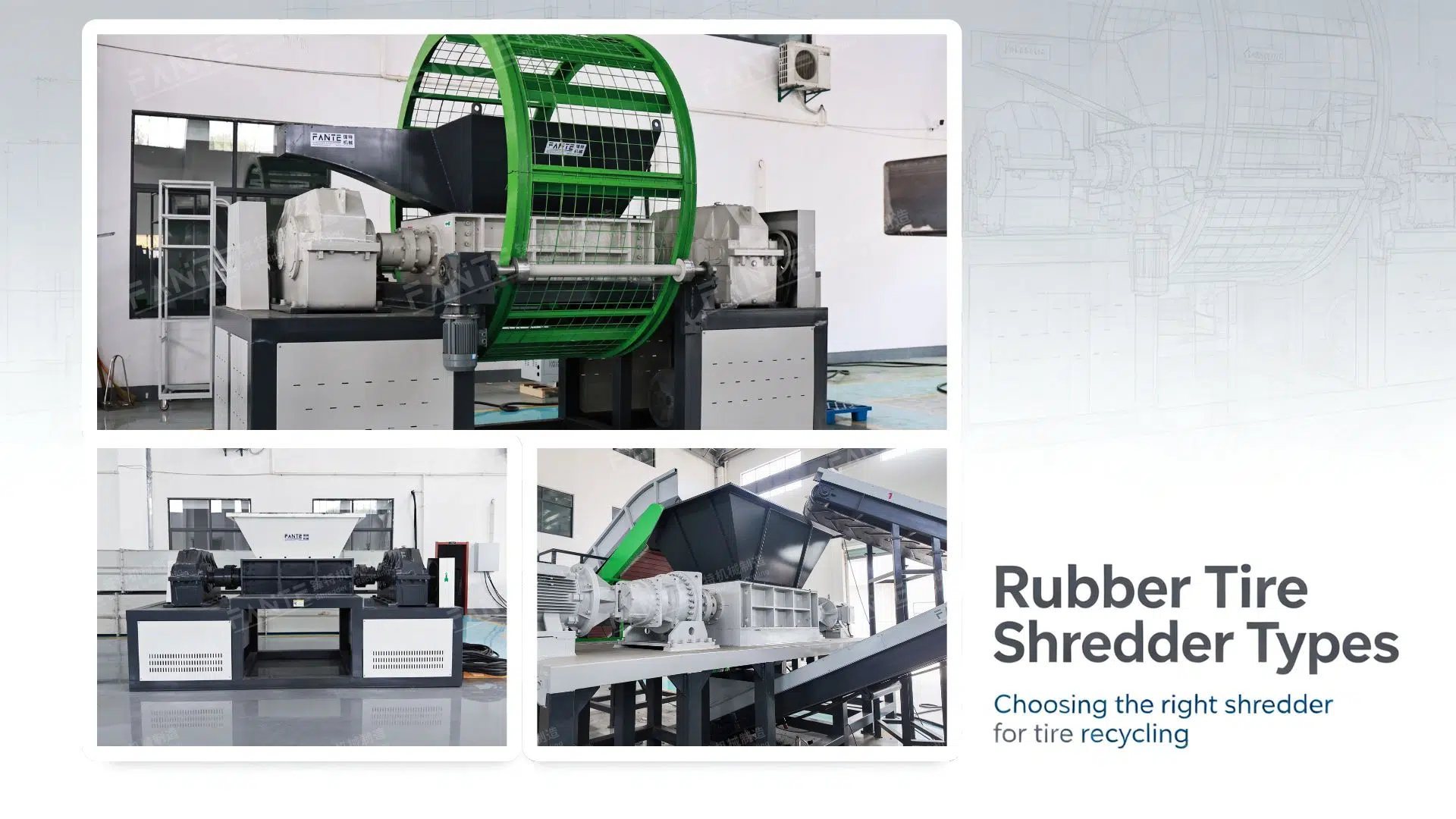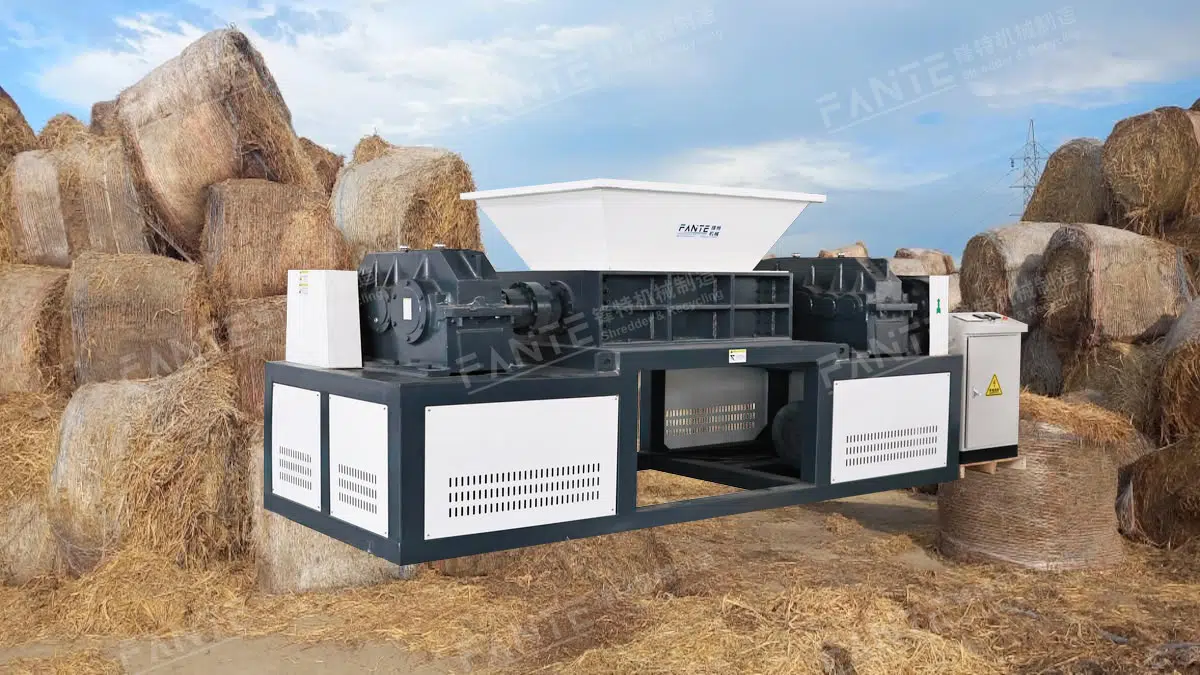







Before waste tires enter a pyrolysis reactor, mechanical pretreatment determines feed consistency, equipment loading, and downstream operating stability. A properly configured 轮胎回收设备 for sale system should reduce whole tires to a controlled feed size, remove liberated steel, and provide a stable material flow for the pyrolysis stage.
For tire pyrolysis projects, shredding is not simply a size-reduction step. The pretreatment system must handle different tire constructions, control oversized material, manage steel wire, and prevent excessive fines from entering the thermal process.
Why Is Pretreatment Important for Tire Pyrolysis?
Whole tires are unsuitable for direct feeding into most continuous pyrolysis systems.
Passenger tires, truck tires, and OTR tires contain rubber, steel reinforcement, bead wire, and textile components. Their dimensions and internal structures also vary significantly.
Feeding oversized or poorly prepared tires can create several problems:
- Irregular reactor feeding
- Increased mechanical load on feeding equipment
- Unstable material residence time
- Difficult material conveying
- Excessive steel entering the reactor
- Poor control of reactor feed rate
Therefore, the pretreatment line should produce a consistent feed before the material reaches the pyrolysis system.
1. Whole-Tire Preparation and Bead Wire Considerations
The first step is to determine whether whole tires will be processed directly or whether bead wire will be removed before primary shredding.
Tire beads contain concentrated steel wire and require significant cutting force. For passenger and truck tires, a tire debeader can remove the bead section before shredding.
This reduces the amount of concentrated steel entering the primary shredder and can improve subsequent material separation.
For large truck and OTR tires, the preparation method should be determined according to tire diameter, sidewall thickness, bead construction, and required throughput.
2. Primary Shredding: Reducing Whole Tires to a Controlled Size
The primary shredder performs the first major size reduction.
A double-shaft or heavy-duty shredder configuration is commonly considered for this stage because waste tires require high torque rather than extremely high rotor speed.
The key technical parameters include:
| Cutting Torque | 切割室 | Knife Configuration |
| The shredder must generate sufficient torque to penetrate thick sidewalls and reinforced tread sections. Insufficient torque can cause rotor stalling, overload protection activation, and unstable production. | The chamber dimensions should match the maximum tire diameter and expected feeding method. Oversized truck or OTR tires may require a larger feeding opening and stronger cutting components. | The knife profile and hook geometry influence how the tire is gripped and cut. The objective is stable tearing and cutting rather than excessive pulverization. For pyrolysis pretreatment, producing unnecessarily fine material at the first stage is usually inefficient. |
3. Screening Controls the Actual Feed Size
After primary shredding, screening can separate correctly sized material from oversized pieces.
A 50 mm rotary screen can be used when the project requires controlled discharge around this size.
Another configuration is a double-shaft shredder combined with a disc screen.
The disc screen separates material mechanically. Oversized pieces can be returned to the shredder for another pass.
This closed-loop arrangement prevents large tire pieces from moving directly toward the pyrolysis feeding system.
The important point is that shredder discharge size and actual feed size are not necessarily the same. Screening and recirculation provide the final size control.
4. Why Secondary Shredding May Be Required
One shredding stage does not always provide the feed consistency required by a pyrolysis plant.
Large tire pieces can contain steel wire that remains partially embedded in rubber. Secondary processing can further open these pieces and improve steel liberation.
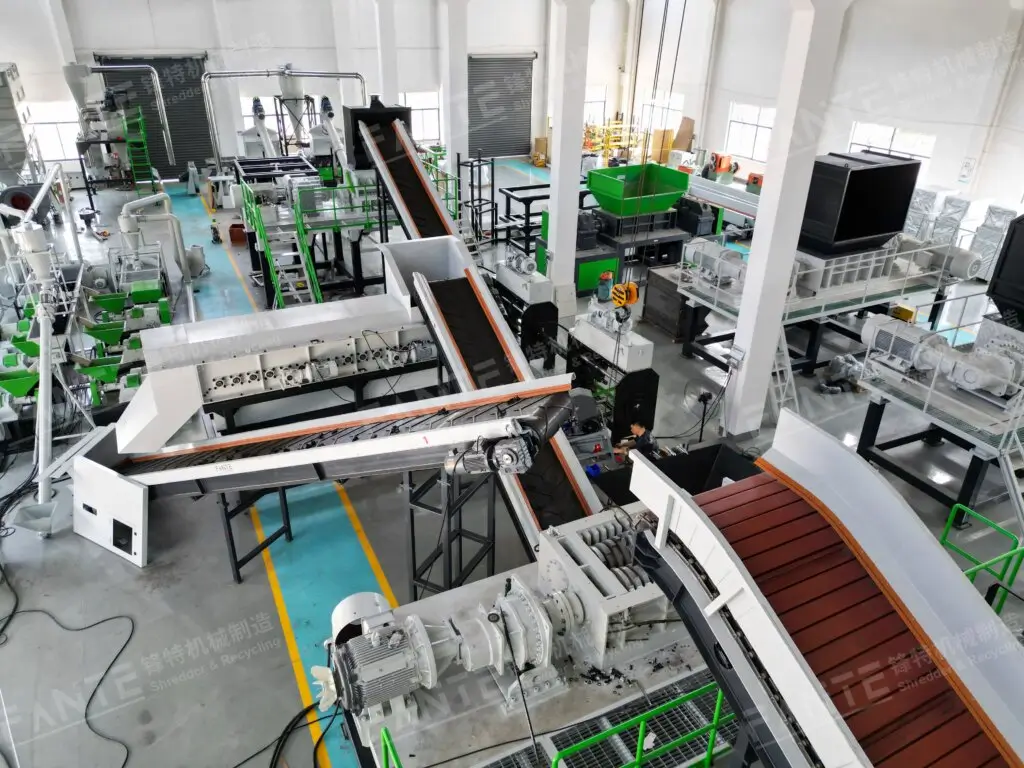
A typical mechanical sequence can therefore be:
Whole tires → Primary shredder → Screening → Secondary shredding→ Magnetic separation → Screening → Pyrolysis feed
The actual configuration depends on the reactor’s permitted feed size and the physical characteristics of the raw tires.
5. Magnetic Separation of Liberated Steel
Steel removal is a critical part of mechanical pretreatment.
As operators shred tires, they expose steel reinforcement and can separate it using magnetic equipment.
Operators normally position a magnetic separator after a shredding stage where sufficient steel liberation has occurred.
Its operating performance depends on:
- Material layer thickness
- Conveyor speed
- Magnet strength
- Installation position
- Steel wire size
- Rubber carryover
For high-throughput systems, you may consider multiple magnetic separation stages.
Removing liberated steel before pyrolysis reduces the metal load entering the thermal process and allows you to handle recovered steel separately.
6. Avoid Producing Excessive Fines Before Pyrolysis
Pretreatment should not automatically pursue the smallest possible particle size.
Excessive fine material can create conveying and feeding problems. It can also increase dust generation and complicate material handling.
The target should be a controlled and consistent feed size, not maximum size reduction.
This is why you should design the shredder, screen, separator, and conveyor as one processing system.
结论
Mechanical pretreatment is a critical interface between waste tires and pyrolysis.
The objective is not simply to shred tires. The process must create a controlled feed, remove liberated steel, manage oversized material, and maintain stable feeding conditions.
Therefore, engineers should design a properly engineered tire recycling equipment for sale solution around the pyrolysis reactor’s feed requirements.
For a new project, the most reliable approach is to define the required feed size and throughput first, then configure the shredding, screening, magnetic separation, and conveying stages around those parameters.
常见问题
Key factors include feed size consistency, feeding rate, steel content, and continuous material flow. The pretreatment system should match the reactor’s specific feed requirements.
Customers should confirm the tire type, required capacity, target feed size, steel separation requirements, operating hours, available space, and power supply before selecting equipment.