Tire Recycling for 30 Mesh Rubber Powder Production
A tire recycling line configured for 30 mesh rubber powder brings together staged size reduction, magnetic separation, fiber removal and closed-circuit screening. Stable production depends on how these stages work together: the grinding section needs consistent feed, the separation section needs effective material liberation, and the screening section needs enough capacity to handle both new feed and returning material.
FANTE’s waste tire recycling systems can be configured around the required output. For a 30 mesh project, the production arrangement centers on controlled grinding and classification, supported by the upstream shredding and separation stages.
Process Route for 30 Mesh Rubber Powder
Oversized rubber returns for further reduction. Magnetic and fiber separation stages are incorporated according to the material stream and line configuration.
Primary Shredding and Feed Preparation
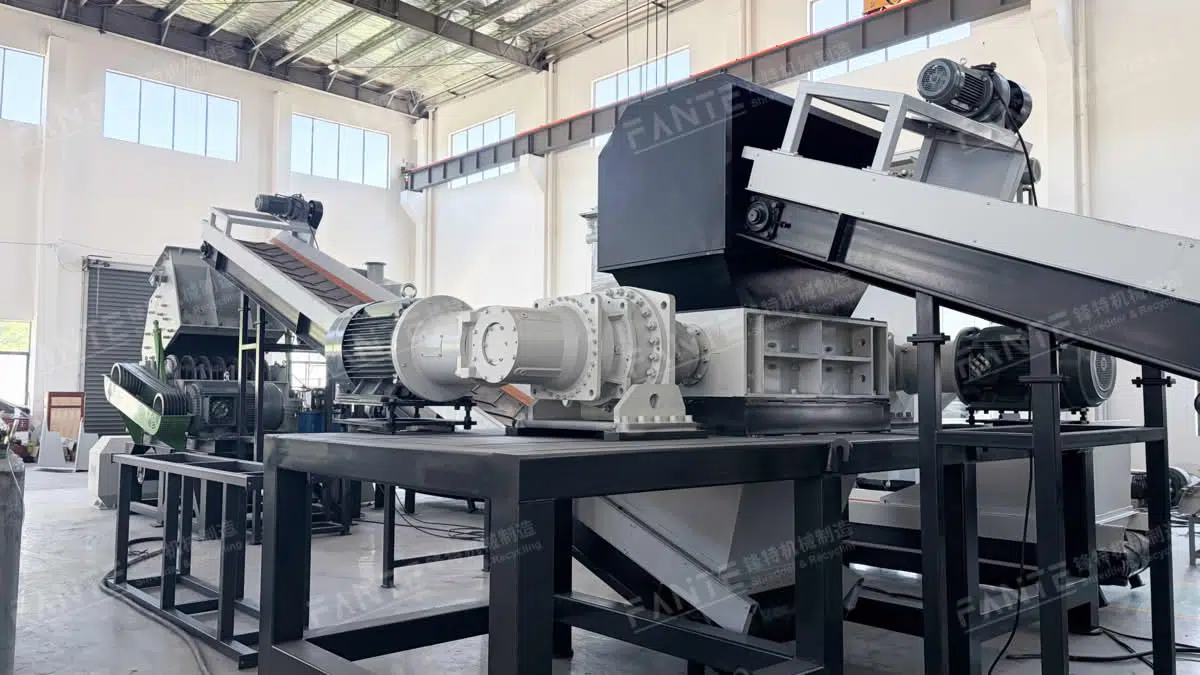
The front end reduces tires to material suitable for the next processing stage. Tire dimensions, construction and feed condition determine the preparation arrangement, including cutting or bead removal where required. A 轮胎粉碎机 provides primary size reduction, while downstream equipment controls further reduction and material separation.
Consistent transfer between stages supports steady grinding. Buffer storage and controlled feeding can reduce the effect of interruptions upstream and prevent sudden changes in the load entering the powder section.
Steel Liberation and Magnetic Separation
Further reduction releases reinforcement wire from the rubber. A tire rasper can be integrated into this section, with magnetic separation positioned to remove liberated steel. Additional separation stages can capture wire exposed later in the process.
The condition of the rubber entering the grinder influences both wear and finished-product cleanliness. Separation performance therefore forms part of the grinding section’s operating conditions, rather than being treated only as a final cleaning step.
Grinding and Classification
The prepared rubber enters the grinding section for further reduction. Feed consistency, working settings, component condition and heat management influence the size distribution and stability of production. The arrangement may use a rubber cracker, a dedicated mill or a combination of reduction stages, depending on the process design.

Screening separates the finished fraction from material that needs further processing. Oversized rubber returns to the reduction circuit. The screen, conveying equipment and grinder must handle this circulating load together; a restriction at any one stage can limit the discharge of finished 30 mesh powder.
Fiber Separation and Powder Collection
Textile fibers become easier to separate as the tire material is reduced. Air-based separation can be integrated at suitable stages to remove liberated fiber, while dust collection supports material handling around the processing equipment. The final arrangement depends on feedstock composition and the required cleanliness of the powder.
Finished powder is collected and packed separately from recovered steel, fiber-rich fractions and returned material. Enclosed transfer and suitable storage help maintain product condition between production and dispatch.
Keeping 30 Mesh Output Consistent
The screen cut is one part of finished-product control. Particle-size distribution, residual steel, fiber content and moisture also determine batch consistency. Production records connect these results with the feedstock and operating conditions used for each run.
| Production area | Control focus |
|---|---|
| Material feeding | Consistent feed size and delivery to the grinding section |
| 磨削 | Working settings, component wear, temperature and load stability |
| Screening | Screen condition, loading, size distribution and oversize circulation |
| 分离 | Residual steel and textile fiber in the finished powder |
Screen loading and wear can shift the finished fraction even when grinder settings remain unchanged. Monitoring the powder discharge and the returned stream together helps identify whether a production change comes from grinding, classification or material feeding.
Line Capacity at the Finished Powder Stage
For a 30 mesh line, the relevant production figure is finished powder output at the specified quality. Whole-tire input includes steel, fiber and other fractions removed during processing. Rubber circulating through the grinding circuit also contributes to machine load without increasing the finished quantity discharged in that period.
The balance between fresh feed and return material affects effective throughput. Increasing the feed rate does not necessarily increase finished output if the grinding or screening section is already limiting the process. Capacity assessment therefore follows the complete material route, from tire input to packed powder.
Energy consumption and wear-part use are most useful when related to the same finished grade and operating conditions. Tire mix, feed preparation and the quantity of recirculated rubber can change these figures between production runs.
Integrating a 30 Mesh Section Into a Tire Recycling Line
An existing shredding or granulation line may provide the upstream material for a powder section. Integration depends on the available feed size, separation performance and sustained rubber delivery rate. The added section also needs space for screening, returned material, air handling, maintenance and finished-product collection.
Where production includes several rubber grades, the material routing can provide collection points for intermediate fractions as well as the final powder stream. Conveying and storage arrangements keep these grades separate and support changes in the production schedule.
FANTE Tire Recycling Solutions for 30 Mesh Powder
FANTE develops tire recycling configurations around the feedstock, output grade and installation conditions. A 30 mesh production project brings the shredding, separation, grinding and screening sections into one coordinated material flow, with equipment scope established for the specific line.