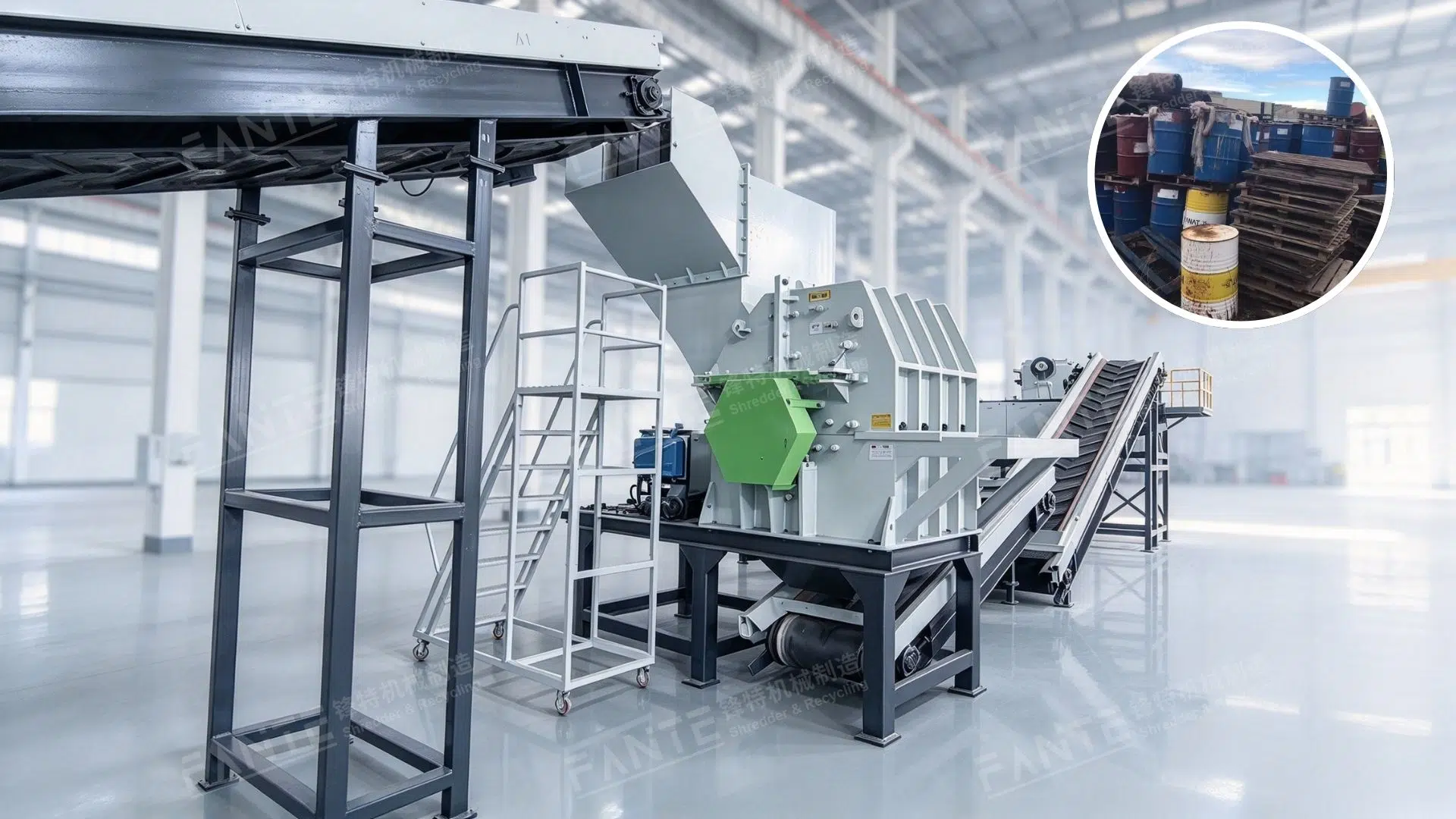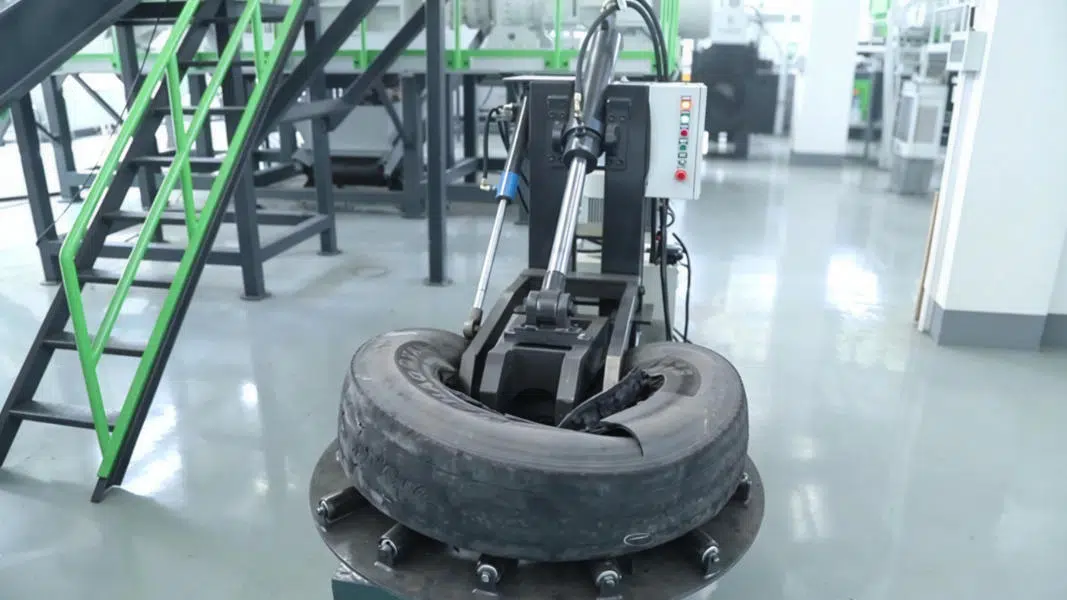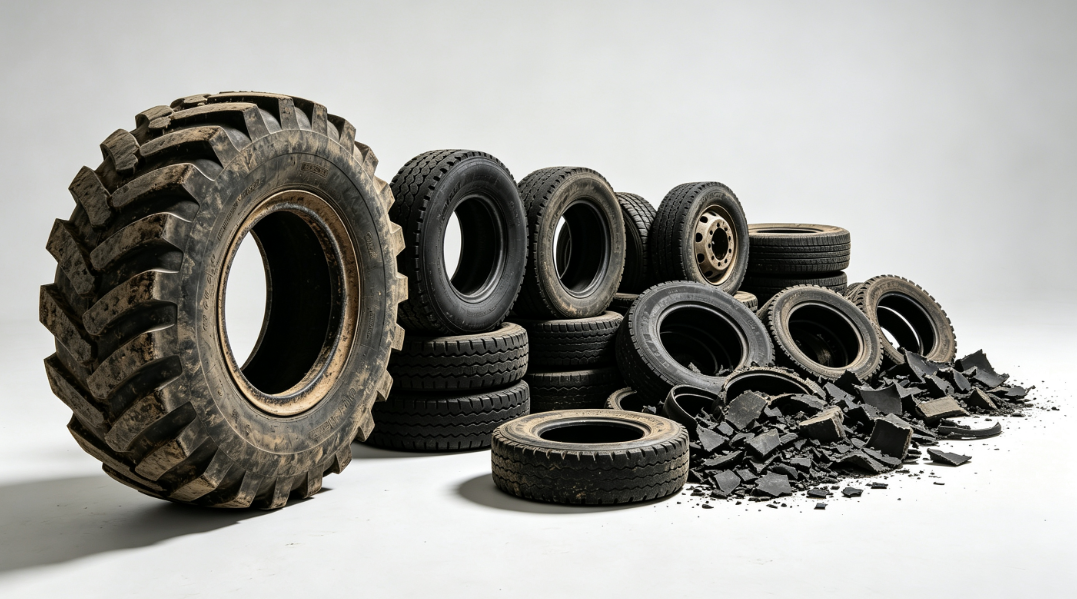







Choosing the right rubber tire shredder machine is important for controlling output size, processing capacity, and long-term operating stability. Different tire recycling projects require different shredding structures and screening methods. In practical applications, common configurations include rotary-screen tire shredders, double-shaft tire shredders, and heavy-duty tire shredders.
Each design has its own advantages. The right choice depends on the required output size, tire type, throughput, and operating conditions.
1. Rotary-Screen Tire Shredder
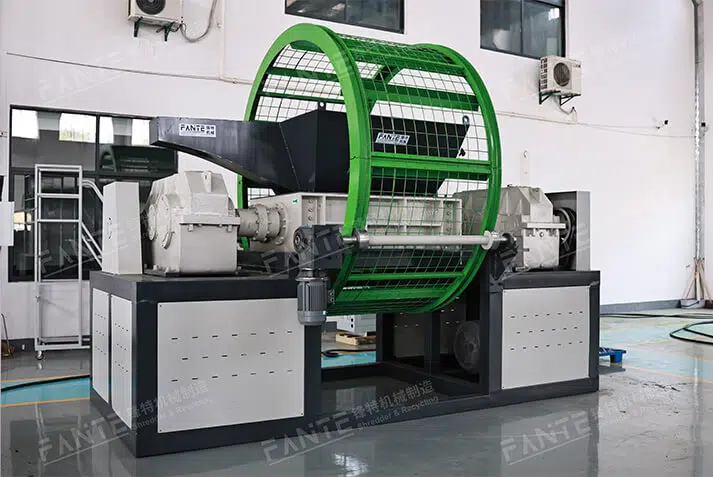
A rotary-screen tire shredder uses a 50 mm rotary screen to control the size of discharged tire material.
During operation, the shredded material enters the rotary screening section. Material that meets the required size passes through the 50 mm screen, while oversized pieces remain in the processing system for further size reduction.
This design provides direct control over the discharge size without relying only on the cutting gap.
Key Advantages
- 50 mm rotary screen for output-size control
- More consistent discharge size
- Reduced oversized material
- Suitable for continuous tire processing
- Simple integration with conveyors and downstream equipment
The rotary screen is particularly useful when a project has a clear requirement for controlled tire chip size. It also helps create a more stable feed for subsequent processing stages.
2. Double-Shaft Tire Shredder
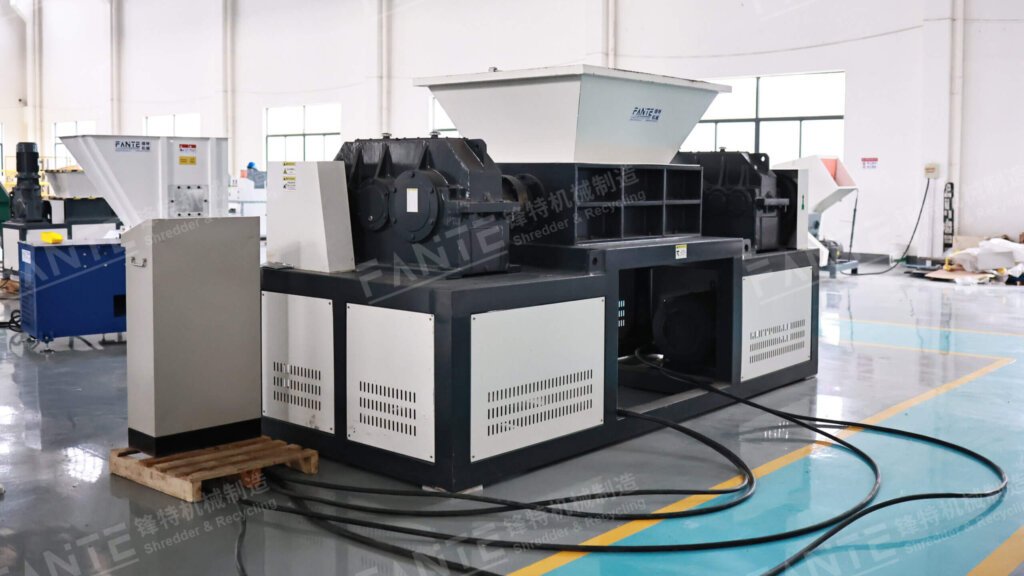
Tire recycling plants use double-shaft tire shredders to process heavy-duty tires.
It uses two counter-rotating shafts to tear and cut waste tires. The high-torque cutting action allows the machine to process whole tires and other reinforced rubber materials efficiently.
For applications requiring tighter size control, the plant can combine the shredder with a disc screen.
The disc screen separates material according to size after the initial shredding stage. The screening system sends properly sized material to the next process, while returning oversized pieces to the shredder for further size reduction.
3. Heavy-Duty Tire Shredder
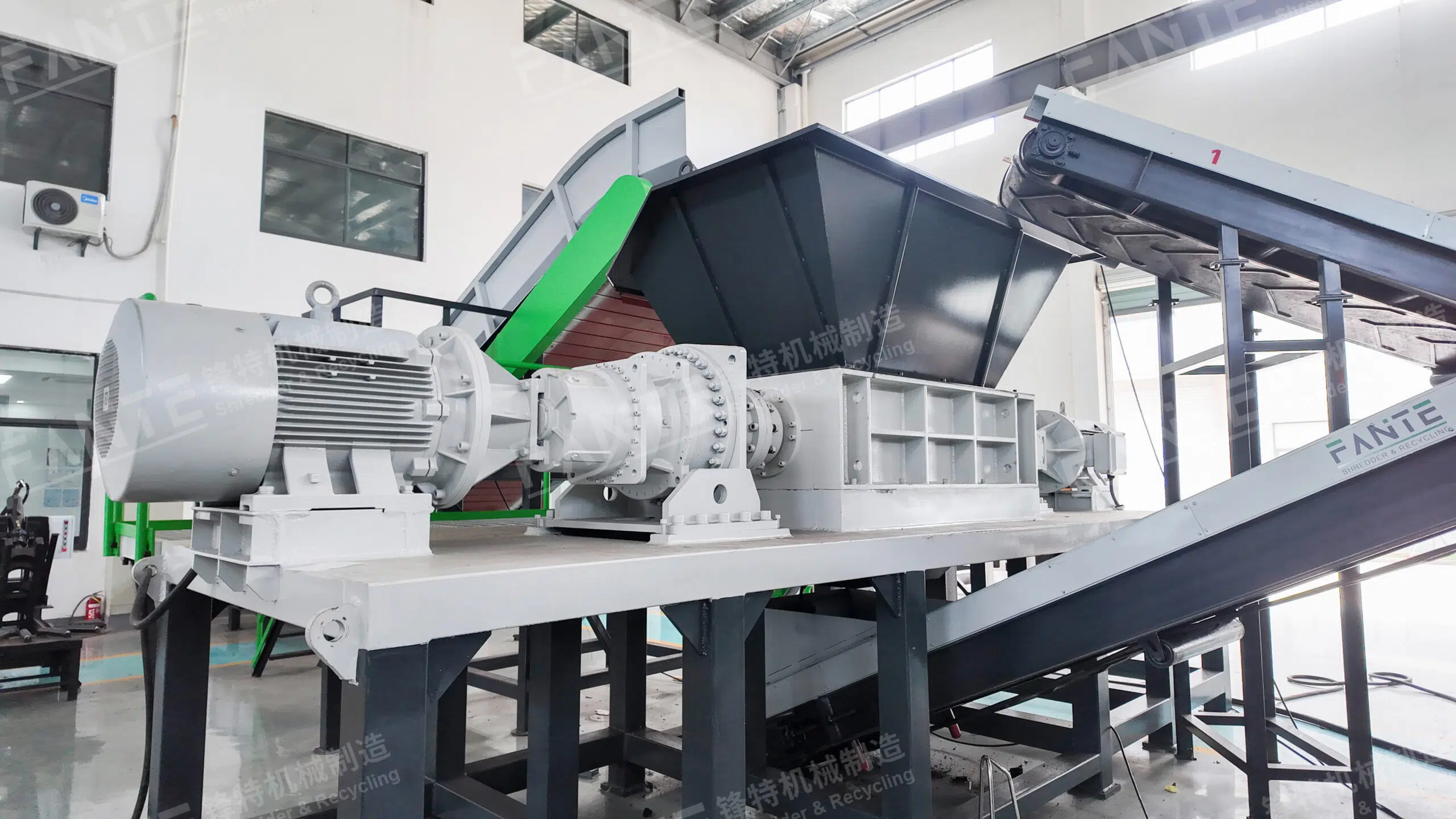
For demanding applications, a heavy-duty tire shredder can provide a higher level of mechanical strength and load-bearing capability.
This type of shredder is equipped with a planetary gearbox, which is designed to transmit high torque through a compact and robust transmission structure.
Compared with conventional gearbox arrangements, a planetary gearbox distributes the load through multiple gears. This helps improve torque transmission and mechanical durability under demanding operating conditions.
Designed for High-Intensity Processing
The heavy-duty configuration is particularly suitable for applications involving:
- Large truck tires
- Heavily reinforced tires
- Continuous high-load operation
- High-throughput recycling plants
- Tough and irregular feed materials
Its strong transmission system provides greater resistance to heavy loads and sudden increases in cutting resistance.
For projects that require both high processing intensity and precise output control, a heavy-duty configuration can be combined with an appropriate screening system.
How Do These Three Tire Shredders Differ?
Although all three machines are designed for tire size reduction, their configurations focus on different requirements.
| Type | Main Feature | Size Control | Typical Advantage |
|---|---|---|---|
| Rotary-Screen Tire Shredder | 50 mm rotary screen | Rotary screening | Controlled discharge size |
| Double-Shaft Tire Shredder | Two counter-rotating shafts | Disc screen | Stable primary shredding |
| Heavy-Duty Tire Shredder | Planetary gearbox | Disc screen | High torque and load capacity |
The selection should therefore be based on the complete processing requirement rather than machine type alone.
How to Choose the Right Configuration?
Before selecting a rubber tire shredder machine, consider four key factors.
1. Required Output Size
If a project requires controlled 50 mm discharge material, a rotary-screen configuration can be a practical option.
2. Tire Type
Passenger tires, truck tires, and heavily reinforced tires place different demands on the cutting system and transmission components.
3. Processing Capacity
Higher throughput generally requires stronger shafts, cutting systems, gearboxes, and feeding structures.
4. Operating Conditions
For continuous high-load applications, a planetary gearbox and heavy-duty transmission system can provide the mechanical strength required for demanding operation.
结论
The different types of tire shredders are designed to solve different processing challenges.
A rotary-screen tire shredder uses a 50 mm rotary screen to control the discharge size. A double-shaft tire shredder can work with a disc screen for efficient size classification and recirculation. A heavy-duty tire shredder equipped with a planetary gearbox is designed for high-torque, high-load applications.
The best rubber tire shredder machine should match the tire type, processing capacity, target size, and operating conditions of the recycling plant.
A properly configured shredding system can improve material flow, reduce unnecessary recirculation, and support stable long-term operation.